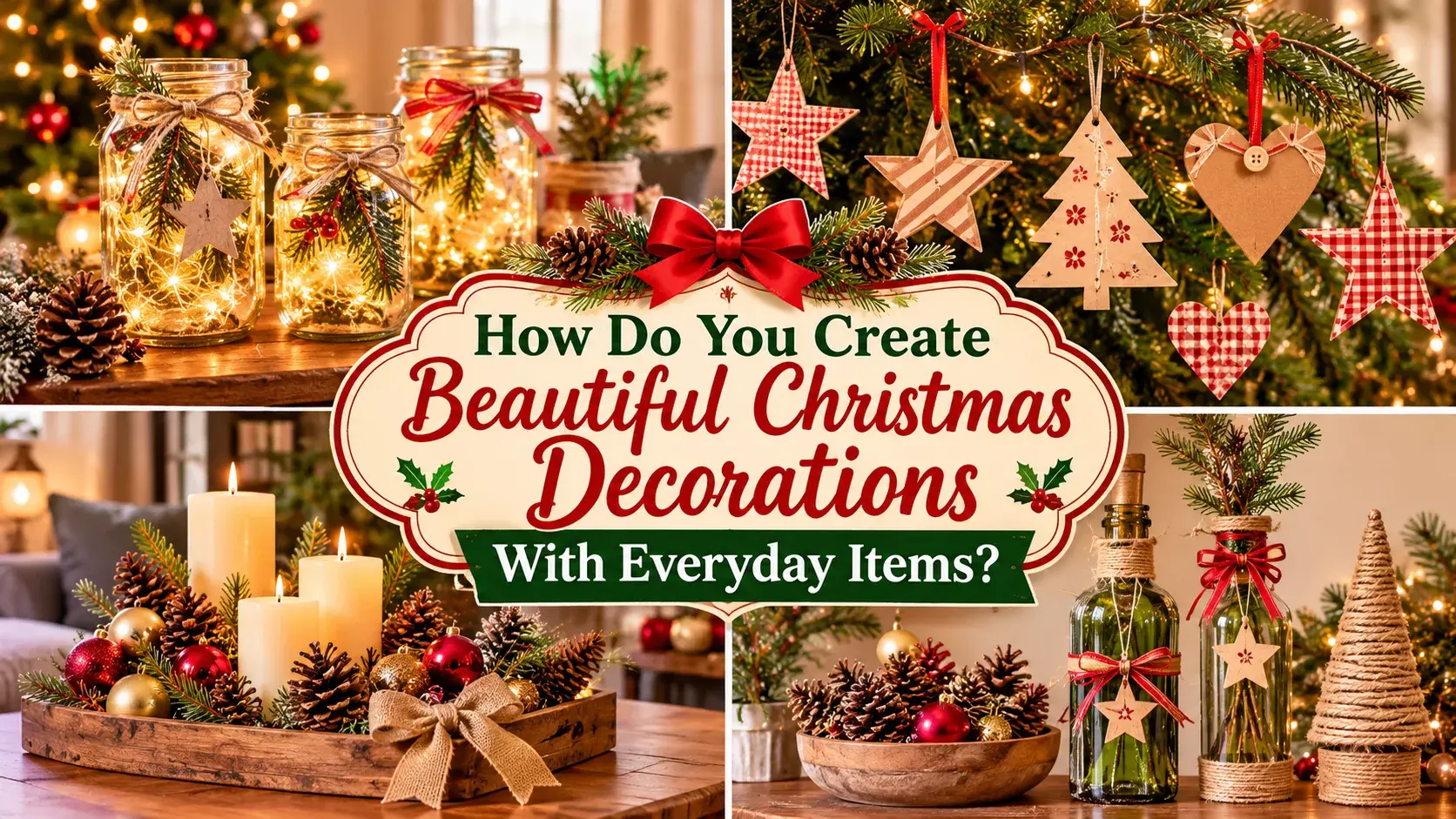
How Do You Create Beautiful Christmas Decorations With Everyday Items?
Christmas decorating does not have to mean buying expensive ornaments, elaborate garlands, and new accessories every year. Sometimes, the most beautiful holiday decorations begin with things already sitting in kitchen cabinets, storage boxes, and forgotten corners of your home. A little creativity can turn ordinary materials into something surprisingly special.
Creating Christmas decorations with everyday items is also a wonderful way to make your home feel personal without stretching your holiday budget. Empty jars, leftover ribbons, cardboard, and natural greenery can become charming decorative pieces with simple techniques. The secret is choosing suitable materials and arranging them thoughtfully.
Why Everyday Items Can Make Beautiful Christmas Decorations
Beautiful Christmas decorating is more about creativity and presentation than the price of individual accessories. An ordinary glass jar can become a charming lantern, while leftover fabric can transform into a delicate garland. When these objects are thoughtfully arranged, they bring warmth and personality into a room without looking inexpensive.
Another advantage is the freedom to create decorations that complement your existing interior. Instead of purchasing an entirely new collection, you can reuse familiar household objects and introduce a consistent Christmas color palette. Natural greenery, wooden details, soft fabrics, and warm lighting work particularly well together.
The most important styling principle is keeping things balanced. Rather than decorating every available surface, choose a few areas where handmade pieces can stand out. Combining different textures, such as glass, wood, paper, and greenery, creates visual interest while keeping the overall arrangement sophisticated.
What Everyday Items Can You Use for Christmas Decorating?
Before starting your projects, look around your home for materials that could have another purpose during the holiday season. Many useful decorating supplies are probably already available, even if they are not traditionally considered craft materials.
- Empty glass jars and bottles: Perfect for lanterns, candle displays, miniature winter scenes, and decorative centerpieces.
- Cardboard and leftover paper: Useful for creating stars, hanging ornaments, paper trees, and simple festive shapes.
- Old ribbons and fabric scraps: Can become garlands, bows, tree decorations, and decorative accents.
- Pinecones, twigs, and dried branches: Bring natural texture to wreaths, table arrangements, and rustic Christmas displays.
- Unused containers and wooden trays: Provide practical foundations for attractive centerpieces and decorative arrangements.
- Old ornaments and wrapping supplies: Can be refreshed with ribbon, paper, or simple decorative details.
You do not need to collect everything before beginning. Start with materials that match the projects you like, clean them properly, and gather a few basic supplies such as scissors, string, glue, and tape.
Creative DIY Christmas Decoration Projects
The following projects demonstrate how different household materials can become beautiful holiday decorations. Each idea has a different purpose, appearance, and construction method, making it easier to decorate several areas without repeating the same style.
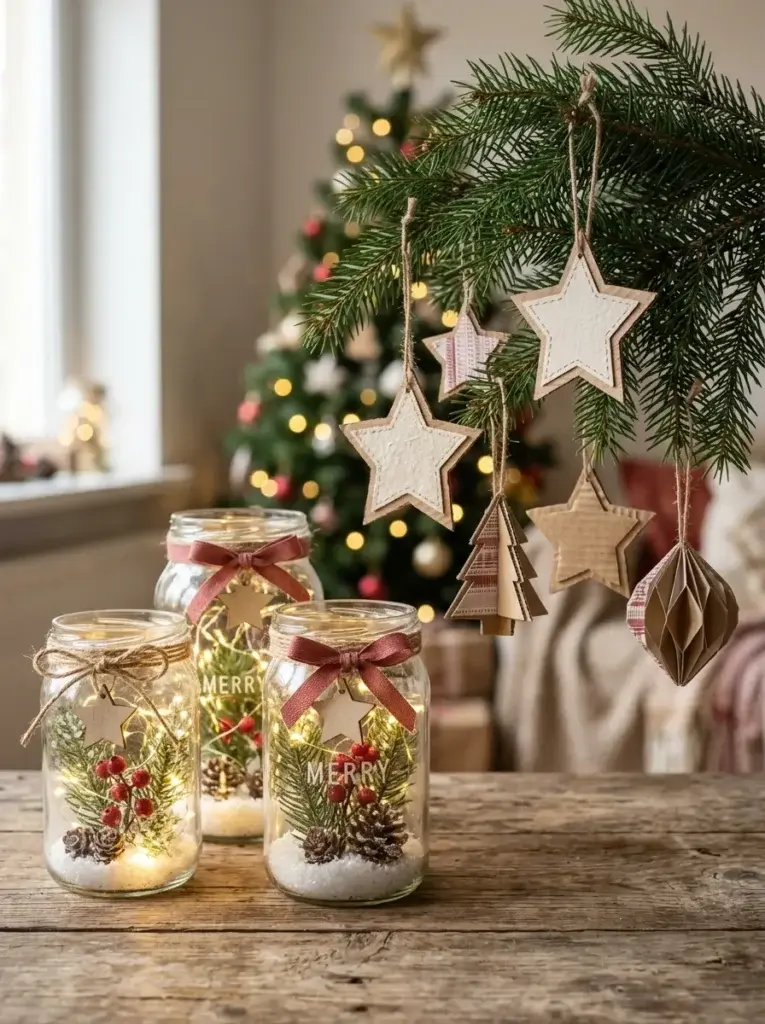
1. Turn Empty Glass Jars Into Beautiful Christmas Lanterns
Empty glass jars are among the easiest materials to transform into festive decorations. Their transparent surfaces allow warm lighting to shine through beautifully, while simple natural details create a cozy appearance. You can use jam jars, candle containers, or other clean glass vessels in different sizes.
Materials needed:
- Empty glass jars
- Battery-operated LED fairy lights
- Evergreen clippings
- Twine or leftover ribbon
- Small pinecones
- Artificial snow or white decorative paper (optional)
How to make them:
- Wash the jars thoroughly and remove any remaining labels or adhesive.
- Place a small amount of decorative greenery or artificial snow inside each jar.
- Carefully arrange battery-operated fairy lights around the interior.
- Wrap twine or ribbon around the opening and finish with a small bow.
- Add a miniature pinecone or natural decorative accent if desired.
For a polished display, arrange three jars of different heights together on a wooden tray. Place them on an entryway console, coffee table, or windowsill. If you do not have fairy lights, use battery-operated LED tea lights designed for decorative displays.
2. Make Handmade Christmas Ornaments Using Cardboard and Paper
Leftover cardboard and wrapping paper can become surprisingly attractive Christmas tree ornaments. Instead of throwing away packaging materials, save clean pieces and use them to create stars, miniature trees, hearts, or simple geometric decorations. Their handmade appearance works especially well with natural and Scandinavian-inspired Christmas styling.
Materials needed:
- Clean cardboard from packaging
- Leftover wrapping paper
- Scissors
- Glue or double-sided tape
- String or thin ribbon
- Pencil and simple templates
How to make them:
- Draw simple festive shapes on cardboard, such as stars, circles, and Christmas trees.
- Cut out two matching cardboard shapes for each ornament.
- Cover one or both sides with wrapping paper, using neutral or traditional Christmas patterns.
- Make a small opening near the top and thread through a piece of ribbon.
- Add another small cardboard layer if you want a slightly raised appearance.
For a coordinated collection, combine kraft paper, muted red patterns, and cream-colored wrapping paper. Hang the ornaments on your Christmas tree or attach them to wrapped gifts. If you do not have patterned paper, plain brown packaging can be decorated with small hand-drawn stars.
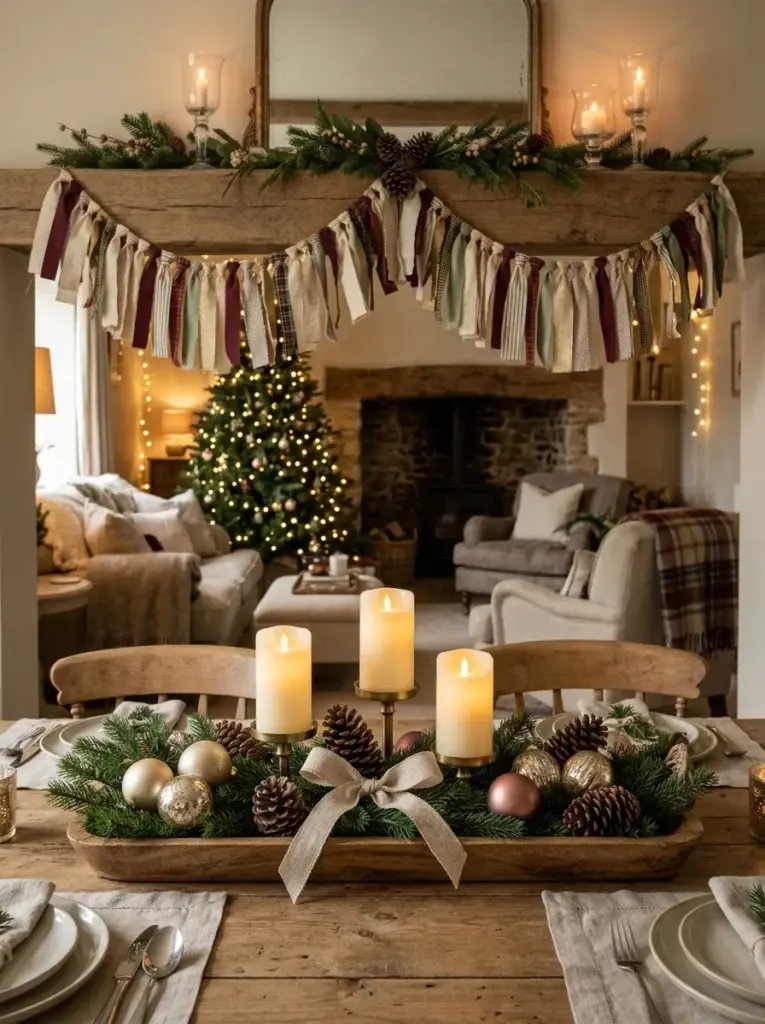
3. Create a Festive Centerpiece With a Wooden Tray and Natural Greenery
A wooden tray can become the foundation of a beautiful Christmas centerpiece using materials you probably already own. This project is particularly useful because it brings several simple decorative elements together without requiring complicated crafting. The result feels organized, warm, and suitable for both everyday holiday styling and special gatherings.
Materials needed:
- A wooden serving tray
- Evergreen branches
- A few pinecones
- Small Christmas ornaments
- LED candles
- Leftover ribbon
How to make it:
- Clean the wooden tray and select a flat surface for arranging everything.
- Place small evergreen branches around the edges, leaving enough room for the other decorations.
- Position LED candles of different heights toward the center.
- Fill empty spaces with pinecones and a few coordinating Christmas ornaments.
- Finish with a simple ribbon bow attached to one corner of the tray.
For an elegant appearance, choose warm white, natural green, and champagne-colored accents. Avoid filling every available space because the wooden tray should remain visible. You can also replace pinecones with dried orange slices or small wooden ornaments if those materials are easier to find.
4. Make Christmas Garlands From Fabric Scraps and Leftover Ribbons
Fabric scraps are useful for creating soft, decorative garlands that add color and texture to ordinary spaces. This project is especially suitable for people who have leftover fabric from sewing, old decorations, or unused gift ribbons. Unlike traditional greenery garlands, fabric versions can be customized to match almost any interior.
Materials needed:
- Leftover fabric pieces
- Old ribbons
- Strong string or twine
- Scissors
- Measuring tape
How to make it:
- Cut your fabric into small strips of approximately equal length.
- Separate the pieces into a coordinated selection of colors and patterns.
- Tie each strip around a long piece of twine, leaving small gaps between them.
- Alternate fabric pieces with leftover ribbon to create a varied texture.
- Continue until the garland reaches your desired length.
Hang the finished garland along a staircase railing, across a mantel, or around a decorative shelf. Cream, muted red, and forest green create a traditional Christmas appearance, while neutral fabrics offer a more understated look. If you do not have fabric, use strips of leftover wrapping paper to create a lighter paper garland.
5. Create Rustic Christmas Decorations With Pinecones and Twigs
Natural materials can bring an entirely different feeling to Christmas decorating. Pinecones, fallen twigs, and dried branches offer interesting shapes and textures without requiring much alteration. Their rustic appearance works beautifully with wooden furniture, neutral interiors, and traditional Christmas color combinations.
Materials needed:
- Clean, dry pinecones
- Small fallen branches
- A shallow wooden bowl or basket
- Twine
- Leftover ribbon
- Small decorative ornaments
How to make them:
- Clean the pinecones and remove loose dirt or debris.
- Allow natural materials to dry completely before bringing them indoors.
- Arrange several pinecones inside a shallow wooden bowl or basket.
- Add a few small branches to create height and visual interest.
- Finish with a simple ribbon bow or a few muted Christmas ornaments.
For another variation, tie individual pinecones with twine and hang them from decorative branches. Place the bowl on a coffee table or dining table, where its natural textures can complement your other decorations. If pinecones are unavailable, dried seed pods or suitable artificial natural accents can provide a similar effect.
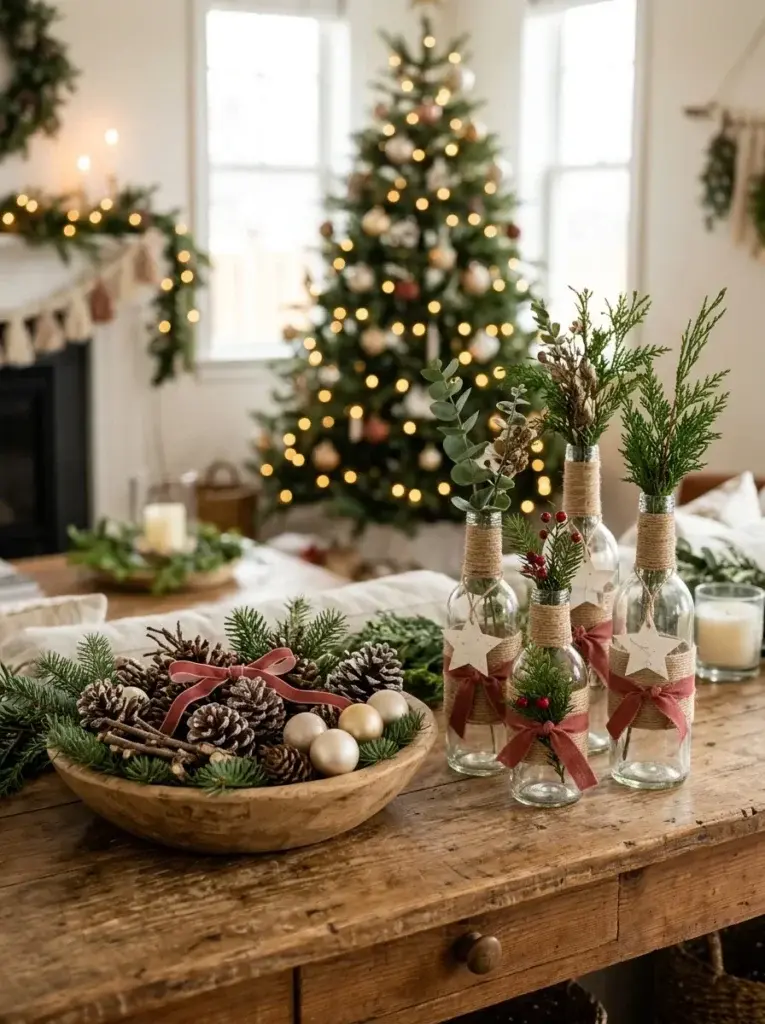
6. Transform Ordinary Glass Bottles Into Decorative Christmas Accents
Empty glass bottles can become attractive decorative pieces with only a few simple additions. Their height makes them particularly useful for creating visual variety on shelves, dining tables, and entryway consoles. You can reuse bottles from the kitchen or choose different shapes to make the arrangement more interesting.
Materials needed:
- Clean empty glass bottles
- Leftover ribbon
- Twine
- Small evergreen sprigs
- Decorative paper
- Glue or removable adhesive
How to make them:
- Remove the labels and clean the bottles thoroughly.
- Choose a simple decoration, such as wrapping twine around the neck or attaching a fabric ribbon.
- Add a small evergreen sprig beneath the ribbon.
- For additional detail, attach a small paper star or handmade decorative tag.
- Arrange bottles in groups of two or three with different heights and shapes.
Clear bottles create a delicate, understated appearance, while green or brown glass works well with rustic decorations. Place them on a dining table, kitchen counter, or console. If you have no ribbon, a simple piece of natural twine can provide an equally attractive finish.
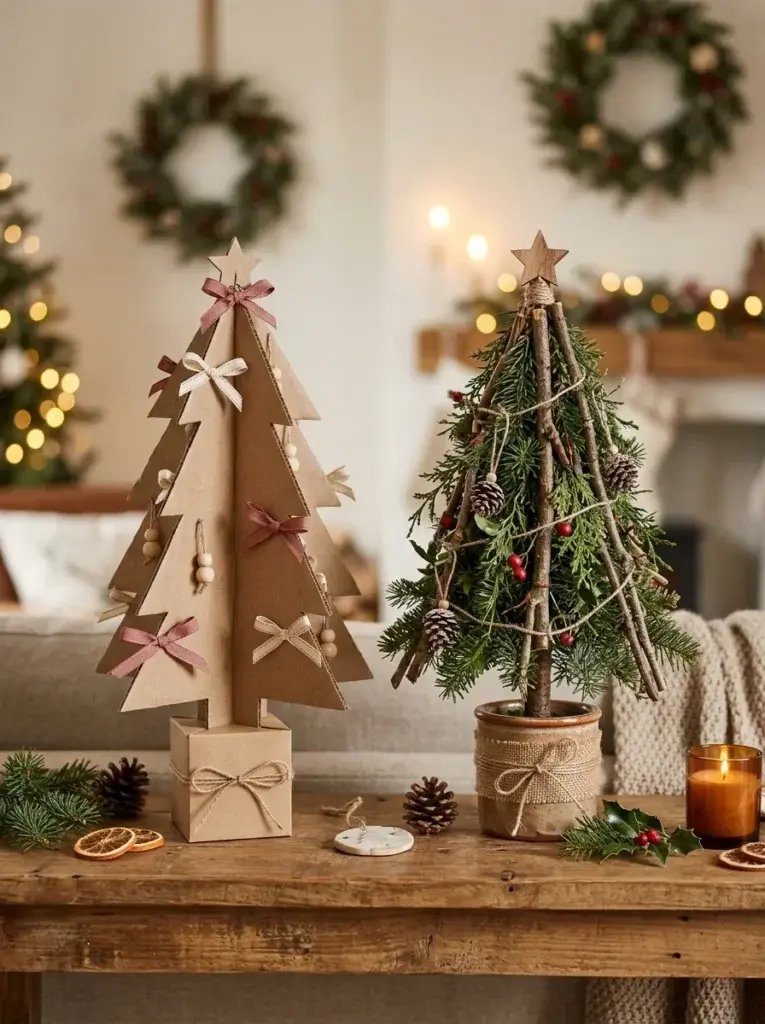
7. Build Handmade Tabletop Christmas Trees From Cardboard and Branches
A small handmade Christmas tree is an excellent alternative when you want to decorate a shelf, desk, or compact corner without adding another full-sized tree. Cardboard and natural branches offer two different ways to create one, allowing you to choose the style that best suits your home.
Materials needed:
- Clean cardboard or small natural branches
- Scissors
- Glue
- A small cardboard base or sturdy container
- Twine
- Small leftover ornaments
How to make them:
- For the cardboard version, cut two matching tree shapes from thick cardboard.
- Make a small vertical slit in each shape so they can fit together and stand upright.
- Cover the cardboard with kraft paper or leftover wrapping paper.
- Alternatively, arrange small branches in a cone-shaped formation and secure them carefully to a sturdy base.
- Add a few small ornaments or thin ribbon details without overcrowding the design.
Place your finished tree on a bookshelf, side table, or kitchen counter. Keep the decorations minimal so the handmade structure remains visible. If thick cardboard is unavailable, several layers of thinner cardboard can be glued together to create a stronger base.
8. Design Cozy Christmas Candle Displays Using Recycled Containers
Recycled containers can become attractive bases for candle displays, especially when you combine different shapes and heights. This project is a simple way to introduce warm lighting to a coffee table, dining table, or entryway. Using decorative LED candles makes the arrangement practical while avoiding the risks associated with open flames.
Materials needed:
- Clean glass jars or suitable containers
- Battery-operated LED candles
- Natural greenery
- Small pinecones
- Twine or fabric ribbon
- A wooden tray or decorative plate
How to make it:
- Select three containers with slightly different heights or shapes.
- Clean and dry them thoroughly.
- Place appropriately sized LED candles inside or on top, depending on the container design.
- Add greenery and pinecones around the bases rather than close to electrical components.
- Arrange everything on a wooden tray and finish with a small ribbon detail.
For a more sophisticated display, use matching containers with different heights and keep the surrounding decorations simple. Place the arrangement on a stable surface away from curtains and other obstructions. If glass jars are unavailable, use suitable ceramic containers or existing decorative holders.
How Can You Make Homemade Christmas Decorations Look Expensive?
The difference between an attractive handmade decoration and a cluttered craft display often comes down to color coordination and arrangement. Even inexpensive materials can look sophisticated when they follow a consistent visual direction. Choose two or three complementary colors and repeat them throughout your decorations instead of introducing too many unrelated shades.
Natural materials are another useful way to create a refined appearance. Wooden trays, evergreen branches, pinecones, linen fabrics, and kraft paper introduce texture without making decorations feel overly complicated. Combining matte surfaces with transparent glass also creates subtle contrast that makes simple arrangements more interesting.
Pay attention to how decorations are grouped. Three carefully arranged objects generally create a more intentional display than several unrelated accessories scattered across a surface. Vary their heights slightly, leave some empty space, and use trays or baskets to give smaller decorations a clear visual boundary.
Lighting can also change the appearance of your handmade projects. Warm battery-operated fairy lights and LED candles create a softer atmosphere than harsh lighting. Place them where their glow highlights glass, greenery, and natural textures without overwhelming the rest of your Christmas decorations.
Where Should You Display Your DIY Christmas Decorations?
You do not need to decorate every room to create a festive home. Instead, identify a few areas that naturally attract attention and select handmade pieces according to their size, function, and surroundings.
- Living room: Place glass lanterns, wooden centerpieces, and small tabletop trees on coffee tables and shelves. Keep frequently used surfaces practical and uncluttered.
- Dining table: Use a wooden tray centerpiece with greenery, pinecones, and LED candles. Keep decorations low enough to allow comfortable conversation.
- Kitchen countertops: Display decorated bottles, small jars, or a miniature cardboard Christmas tree in an unused corner.
- Entryway console: Arrange glass bottles, lanterns, and natural pinecone decorations to create a welcoming first impression.
- Windowsills: Small paper ornaments and glass lanterns work particularly well in these compact spaces.
- Fireplace mantels and side tables: Fabric garlands, handmade stars, and small natural arrangements add festive character without taking over the entire area.
Think about how each space is used before placing decorations. A beautiful arrangement should complement your everyday routine rather than make ordinary activities more difficult.
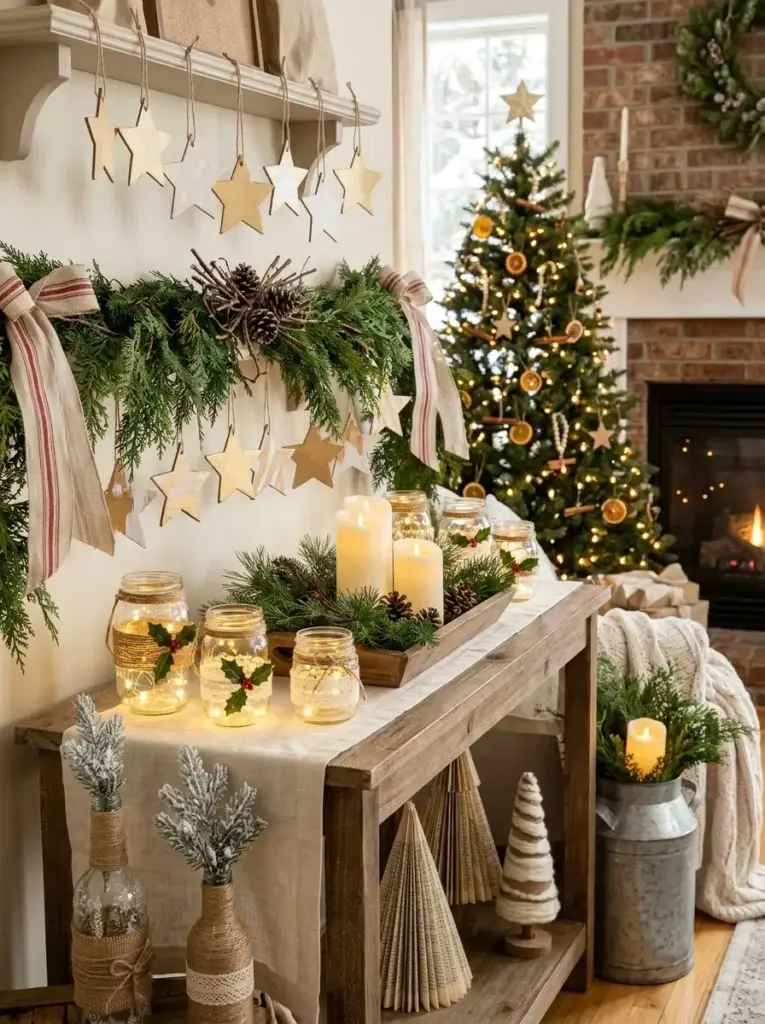
Common DIY Christmas Decorating Mistakes to Avoid
One common mistake is combining too many colors, patterns, and decorative materials in one arrangement. This can make handmade decorations look disconnected. Choose a limited palette and repeat a few materials throughout the room to create a more cohesive appearance.
Another problem is overcrowding. Filling every shelf and tabletop leaves little room for individual decorations to stand out. Give each arrangement enough breathing space, and choose pieces that suit the available surface instead of forcing oversized decorations into small corners.
Material selection also matters. Dirty jars, damaged cardboard, fraying fabric, and unstable containers can make otherwise attractive projects look unfinished. Clean recycled materials properly, check their condition, and use sturdy bases whenever decorations need to stand upright.
Safety deserves special attention when working with homemade decorations. Keep real candles away from ribbons, dried greenery, paper, and fabric. Use battery-operated alternatives where possible, inspect electrical lights for damage, and never overload electrical outlets. Be careful with scissors and cutting tools, and keep small decorative pieces away from young children and pets.
Frequently Asked Questions
1. What household items can I use to make Christmas decorations?
You can use empty glass jars, bottles, cardboard boxes, leftover wrapping paper, old ribbons, fabric scraps, wooden trays, baskets, pinecones, and small branches. These materials can become lanterns, ornaments, garlands, centerpieces, and tabletop decorations with basic crafting supplies.
2. How can I decorate my home for Christmas without spending money?
Start by shopping your own home rather than buying new decorations. Reuse ornaments from previous years, collect suitable natural materials, and repurpose packaging or containers. Rearranging existing accessories into festive groupings can also refresh your interior without requiring additional purchases.
3. What are the easiest DIY Christmas decorations for beginners?
Glass jar lanterns, cardboard ornaments, simple fabric garlands, and pinecone arrangements are excellent beginner-friendly projects. They require minimal materials and do not involve complicated crafting techniques. Start with one small project and gradually create additional decorations as you become comfortable working with different materials.
4. How can I make homemade Christmas decorations look expensive?
Use a coordinated color palette, choose attractive natural textures, and avoid overcrowding. Simple materials such as clear glass, linen, evergreen branches, and wooden accessories can create a refined appearance. Pay attention to proportions and group smaller decorations together for a more intentional display.
5. What natural materials can I use for Christmas crafts?
Pinecones, fallen twigs, evergreen clippings, dried branches, and suitable dried flowers are useful natural decorating materials. They work well in centerpieces, garlands, rustic arrangements, and handmade ornaments. Always clean and dry collected materials before using them indoors, and avoid bringing potentially hazardous plants into homes with pets.
6. How can I make Christmas decorations from recycled materials?
Save clean packaging cardboard, glass jars, empty bottles, leftover fabric, and unused wrapping paper. Turn them into ornaments, lanterns, garlands, and decorative containers using simple tools. Focus on transforming each material rather than hiding its original texture, as natural imperfections can add character to handmade decorations.
Conclusion: Create Beautiful Christmas Decorations With Everyday Items
Creating beautiful Christmas decorations with everyday items is a practical way to bring creativity, warmth, and personality into your home. Empty jars, leftover ribbons, cardboard, wooden trays, and natural materials can become attractive festive accessories when they are thoughtfully transformed and arranged.
The best part is that you do not need an expensive collection of decorations to make your home feel special. Start with materials you already have, choose a consistent style, and create a few meaningful pieces for your favorite spaces. Sometimes, the simplest handmade details make the most memorable Christmas displays.