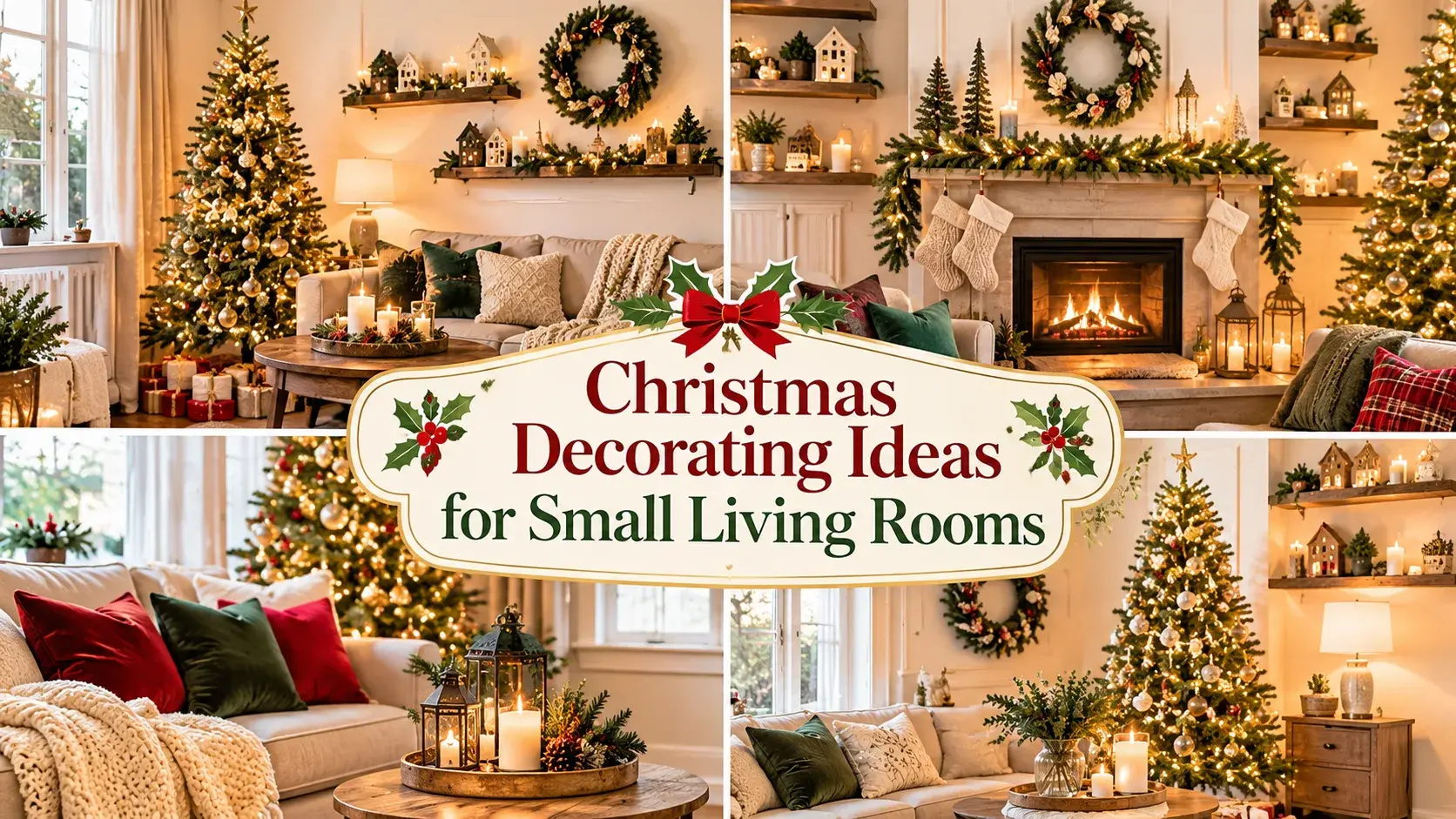
Christmas Decorating Ideas for Small Living Rooms
Christmas Decorating Ideas for Small Living Rooms can feel challenging when every corner already serves a purpose. A traditional Christmas tree, festive accessories, cozy blankets, and seasonal lighting can quickly make a limited space feel crowded. The secret is not decorating less, but choosing pieces that add atmosphere without interrupting everyday comfort.
The best Christmas decorating ideas for small living rooms combine thoughtful furniture placement, coordinated colors, vertical decorating, and carefully selected seasonal accessories. Instead of filling every surface with decorations, focus on a few beautiful details that work together. With the right approach, even a compact apartment living room can feel inviting and wonderfully festive.
Start With a Simple Plan Before Decorating
Before bringing out your Christmas decorations, take a fresh look at your living room. Small spaces benefit from intentional styling because even a few additional objects can affect how comfortably the room functions. Begin by identifying the areas that can accommodate seasonal decorations without making everyday activities more difficult.
Look at the corners beside your sofa, the space underneath floating shelves, window ledges, and unused wall areas. These locations often provide decorating opportunities without requiring additional furniture. You can also temporarily remove a few everyday accessories to make room for Christmas decorations rather than adding everything on top.
Protect Your Walking Space
A beautiful arrangement should never prevent people from moving comfortably around the room. Measure the available space before choosing a Christmas tree, decorative baskets, or oversized floor accessories. Keep frequently used pathways clear, particularly between the entrance, sofa, television, and other important areas.
Choose One Decorating Direction
A consistent decorating style makes a small room feel more organized. You might prefer traditional red and green, Scandinavian-inspired neutrals, rustic farmhouse details, or an elegant gold-and-white Christmas theme. Select two or three main colors and repeat them through your ornaments, textiles, and accessories.
1. Choose a Slim Christmas Tree That Fits Your Layout
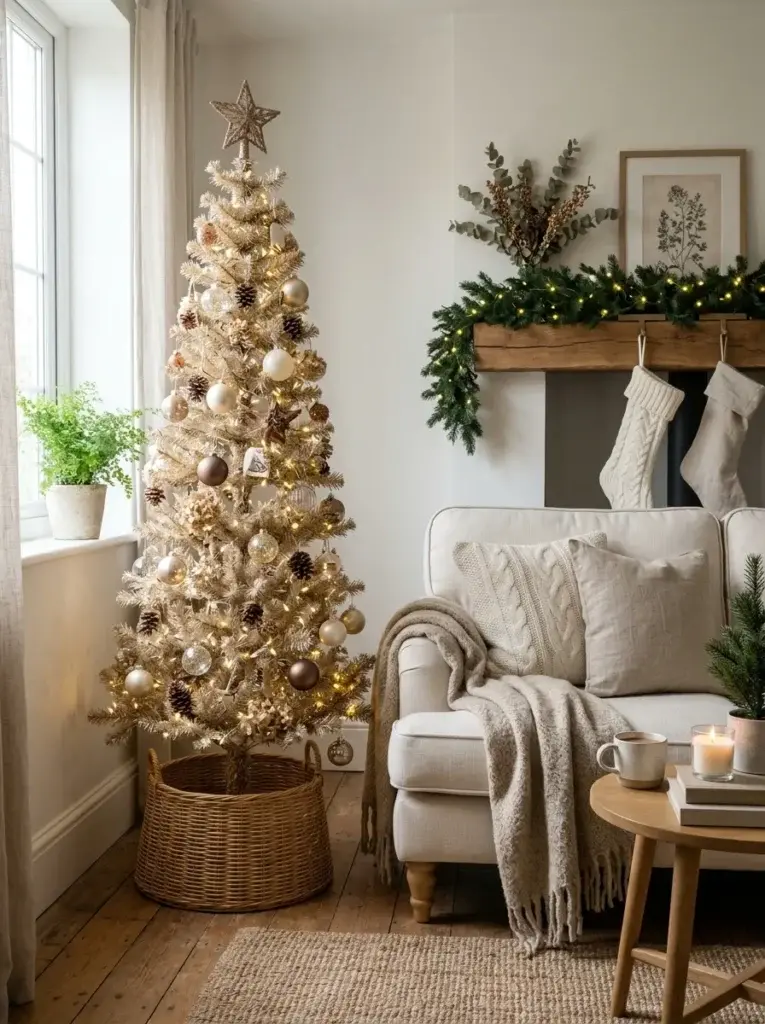
A Christmas tree is often the main attraction of a holiday living room, but a large, wide tree can consume valuable floor space. Instead of choosing the fullest tree available, consider a slim or pencil-style design. These trees provide the familiar Christmas atmosphere while leaving more room for seating and movement.
The best placement depends on your furniture arrangement. An unused corner beside the sofa, an empty area near a window, or a space beside a media console can work beautifully. Before purchasing a tree, measure its height and width, including the space needed for its stand and decorations.
Make a Small Tree Look Beautiful
A smaller tree does not need excessive ornaments to look impressive. Use warm white lights, a coordinated collection of decorations, and a simple tree topper. Metallic champagne ornaments, wooden accents, or classic red baubles can give the tree personality without making its branches look overcrowded.
For a particularly compact room, consider these options:
- Pencil tree: A narrow silhouette suitable for tight corners.
- Tabletop tree: Ideal for apartments with very limited floor space.
- Wall-mounted tree: A creative alternative when floor space is unavailable.
- Half tree: Designed to sit closer to a wall while maintaining a traditional appearance.
A simple woven basket or fabric tree collar can also make the base look more finished. Keep presents neatly grouped underneath rather than spreading gift boxes throughout the room.
2. Create a Cohesive Christmas Color Palette
One of the easiest ways to make a small living room look professionally decorated is to coordinate its Christmas colors. When decorations share a consistent palette, the overall arrangement feels intentional instead of visually busy. This is particularly helpful when your room already contains furniture, artwork, rugs, and everyday accessories.
Start with the colors already present in your living room. If your sofa is beige, cream, or light gray, introduce warm gold, muted green, or soft burgundy. For darker furniture, consider ivory, champagne, and natural evergreen accents to create an attractive contrast.
Three Color Combinations Worth Trying
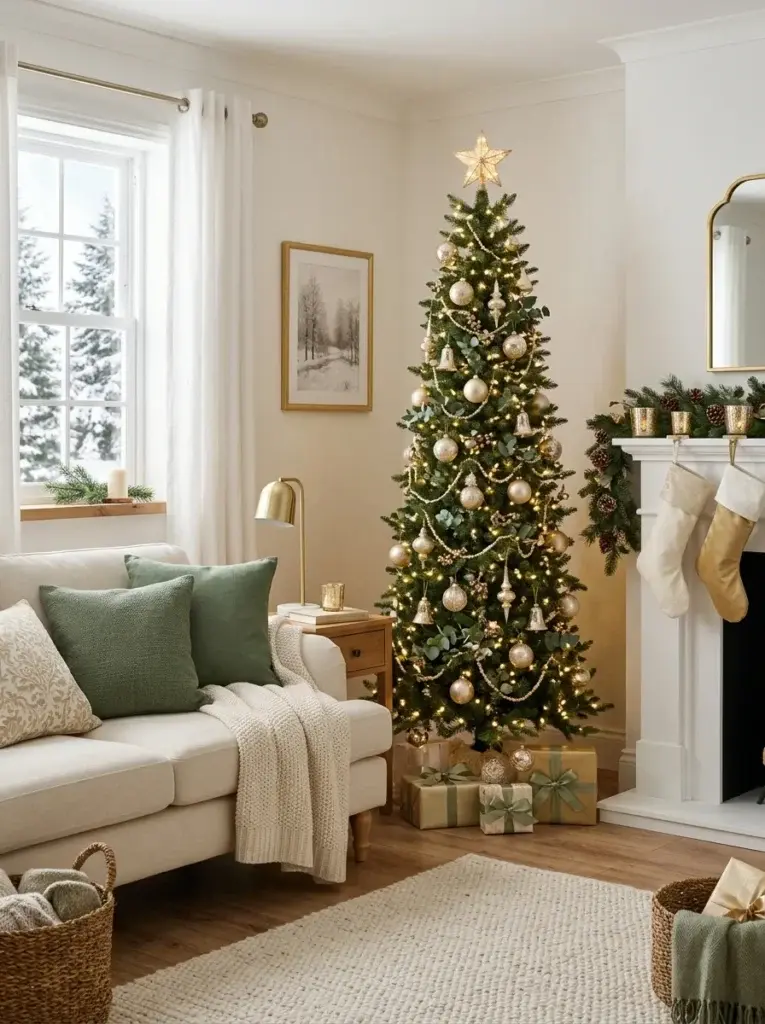
Cream, sage green, and champagne gold: This combination creates a gentle, elegant Christmas atmosphere. Use cream-colored cushions, sage green foliage, and small gold ornaments to bring the colors together.
Traditional red, green, and warm white: Choose this palette if you love classic Christmas decorating. Keep red accents concentrated in a few places, such as cushions, tree ornaments, and a decorative ribbon.
Burgundy, forest green, and antique gold: This richer combination works especially well with wooden furniture and neutral walls. Use burgundy sparingly so the room retains a balanced appearance.
The important thing is to repeat your chosen colors throughout the room. For example, if your tree decorations include gold and sage green, introduce those same shades through a throw pillow, garland, or coffee table accessory. This creates visual continuity without requiring a large decorating budget.
3. Decorate Walls, Shelves, and Windows Instead of Adding More Floor Decorations
When floor space is limited, look upward. Walls, windows, floating shelves, and existing display areas provide valuable opportunities for Christmas decorating. These locations allow you to introduce seasonal details without placing additional furniture or decorative objects in already crowded areas.
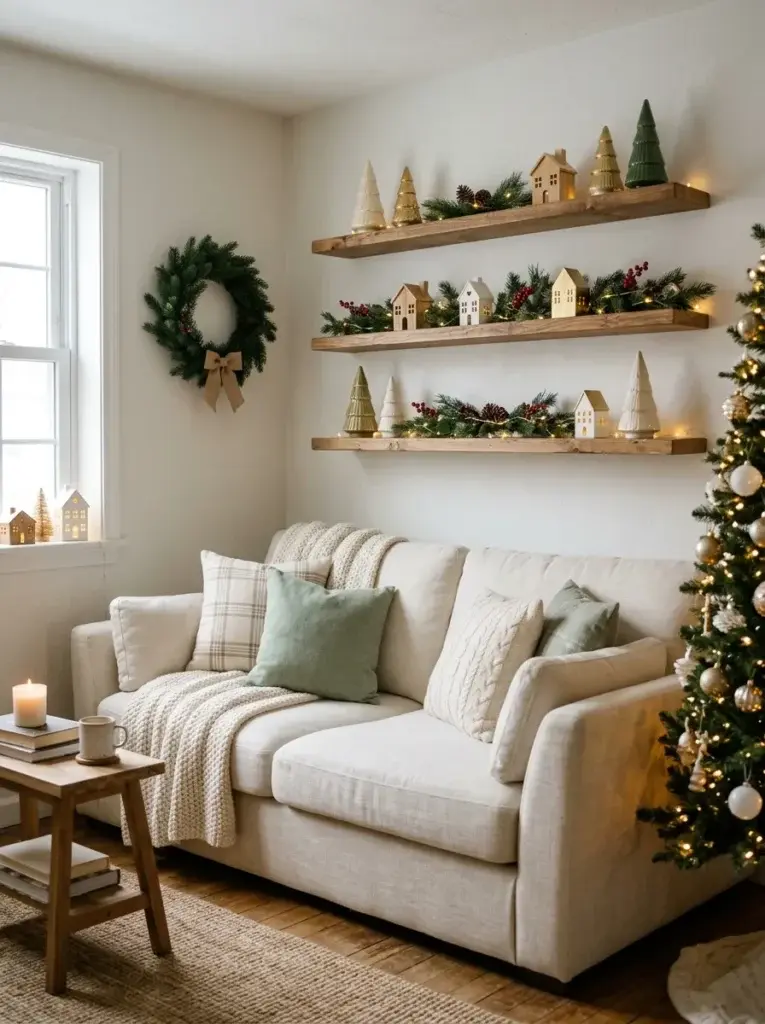
A simple evergreen garland above a television console or along a floating shelf can create an attractive focal point. Add a few small ornaments, delicate ribbons, or warm fairy lights. Avoid making the arrangement too thick, especially when the shelf is already displaying books, photographs, or everyday accessories.
Use Windows for Seasonal Details
Windows are particularly useful because they can become part of your Christmas decoration without requiring additional floor space. Hang a simple wreath in the center, attach a few lightweight ornaments, or place a small string of warm lights around the frame.
If you prefer a minimal appearance, choose one decorative element rather than combining several different arrangements. A natural evergreen wreath with a velvet ribbon can look beautiful against almost any window treatment.
Give Floating Shelves a Christmas Update
You do not need to replace everything already displayed on your shelves. Instead, exchange a few ordinary accessories for seasonal alternatives. Small ceramic trees, wooden houses, miniature evergreen arrangements, and candle holders can introduce Christmas character without making the display feel cluttered.
Remember to distribute decorations across different heights. A combination of standing accessories, small stacked books, and trailing greenery creates a more interesting arrangement than placing everything in one straight line.
4. Use Warm Lighting to Make the Room Feel Cozy
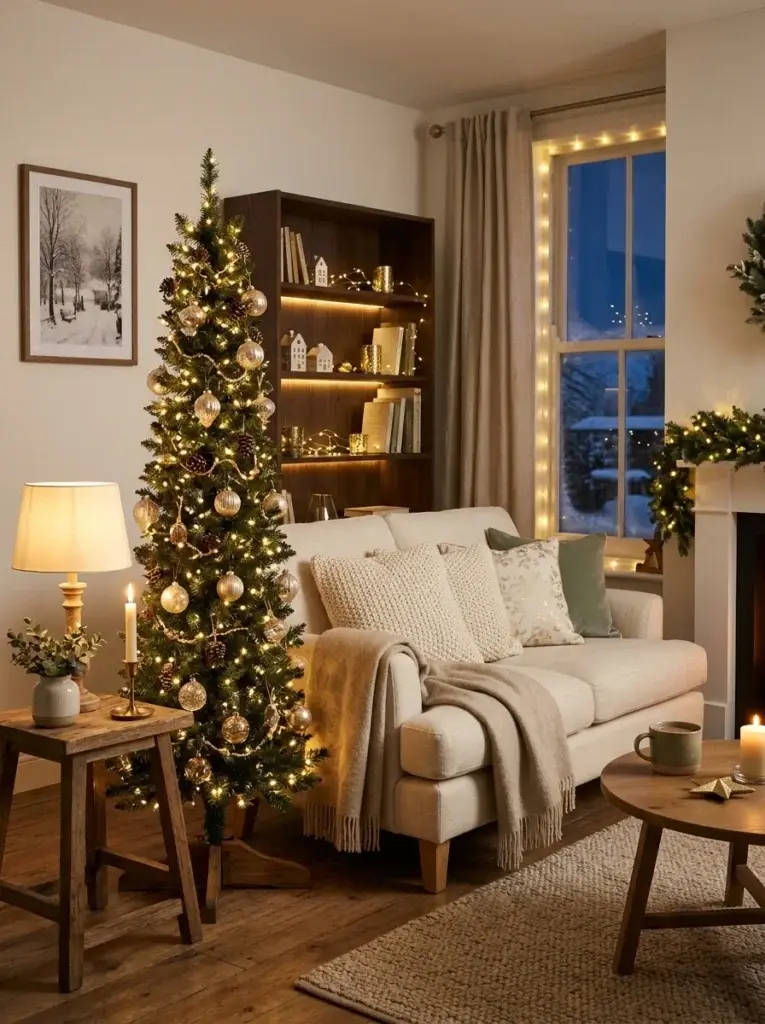
Lighting can completely change the atmosphere of a small living room during the holiday season. Rather than relying on one bright ceiling light, combine several softer light sources to create warmth and depth. This approach makes the room feel more inviting while highlighting your Christmas decorations.
Begin with the Christmas tree lights. Warm white lighting is a versatile option because it complements traditional and modern decorating styles. You can then add a small table lamp, battery-operated candles, or subtle fairy lights around an existing shelf.
Layer Different Light Sources
Think about lighting in three simple layers:
- Ambient lighting: Use your regular ceiling light or a soft floor lamp to illuminate the overall room.
- Accent lighting: Highlight the Christmas tree, garlands, shelves, or decorative arrangements.
- Decorative lighting: Add small fairy lights or LED candles for a gentle seasonal glow.
Battery-operated candles are especially practical when you want the appearance of candlelight without using an open flame near fabrics or decorations. Choose simple designs that complement your existing accessories.
Avoid placing too many illuminated objects together. A few carefully positioned lights usually create a more attractive result than covering every available surface with glowing decorations. The goal is to create a comfortable atmosphere that still works for reading, relaxing, and entertaining.
5. Style Your Coffee Table Without Losing Useful Space
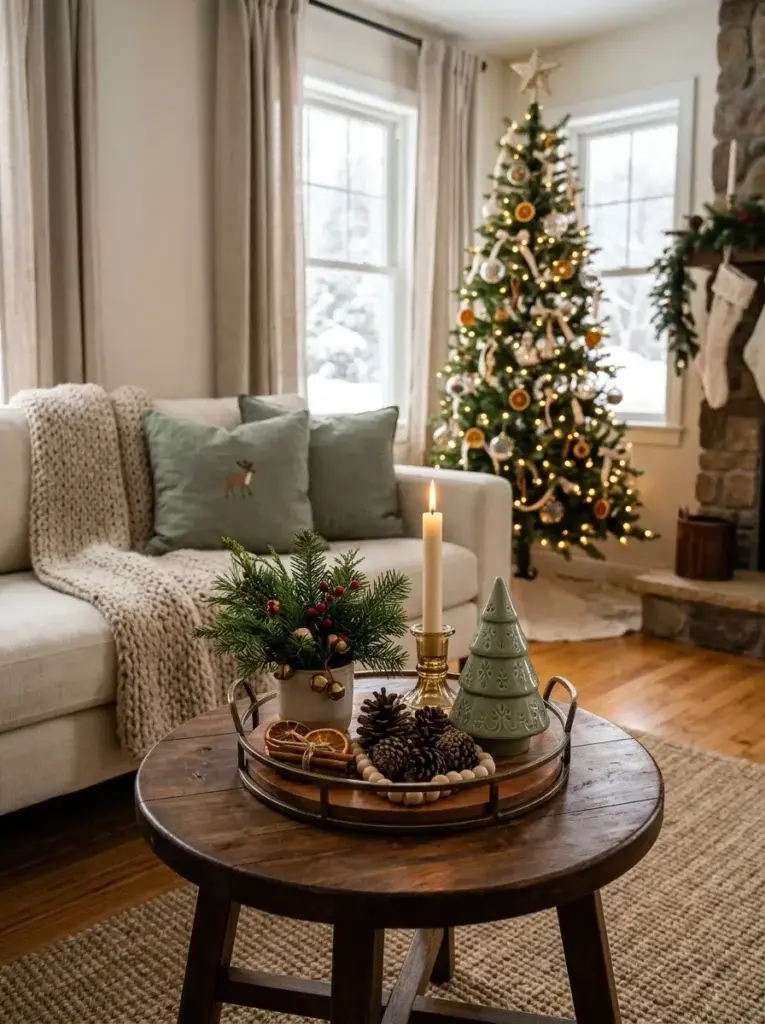
Coffee tables are natural decorating opportunities, but they also need to remain practical. In a small living room, covering the entire surface with Christmas accessories can make everyday activities inconvenient. A better approach is to create one compact decorative arrangement that can easily be moved when you need additional space.
Start with a small tray to keep everything organized. Add a short evergreen arrangement, one decorative candle, and a small ceramic Christmas tree. You can also introduce pinecones, a miniature decorative house, or a few ornaments that match your overall color palette.
Make the Arrangement Functional
Choose accessories that are appropriate for the size and shape of your table. A round table may look better with a compact circular tray, while a rectangular coffee table can accommodate a longer, low-profile arrangement.
Keep these practical details in mind:
- Leave enough space for drinks and everyday essentials.
- Choose low decorations that do not obstruct conversation.
- Avoid oversized arrangements on narrow tables.
- Use lightweight accessories that are easy to relocate.
If your coffee table has a lower shelf, use it for a small stack of holiday books or a decorative basket. This creates another styling opportunity without filling the main surface.
For especially small rooms, a nesting table can be useful because additional surfaces can be brought out when needed and tucked away afterward. The finished arrangement should look festive while remaining comfortable to use throughout the holiday season.
6. Introduce Festive Textiles Without Overcrowding the Sofa
Seasonal textiles are an easy way to refresh a living room without introducing bulky decorations. Cushions, knitted throws, soft blankets, and small decorative rugs can make an ordinary sofa feel more inviting. They are also useful because most can be stored easily once the holiday season ends.
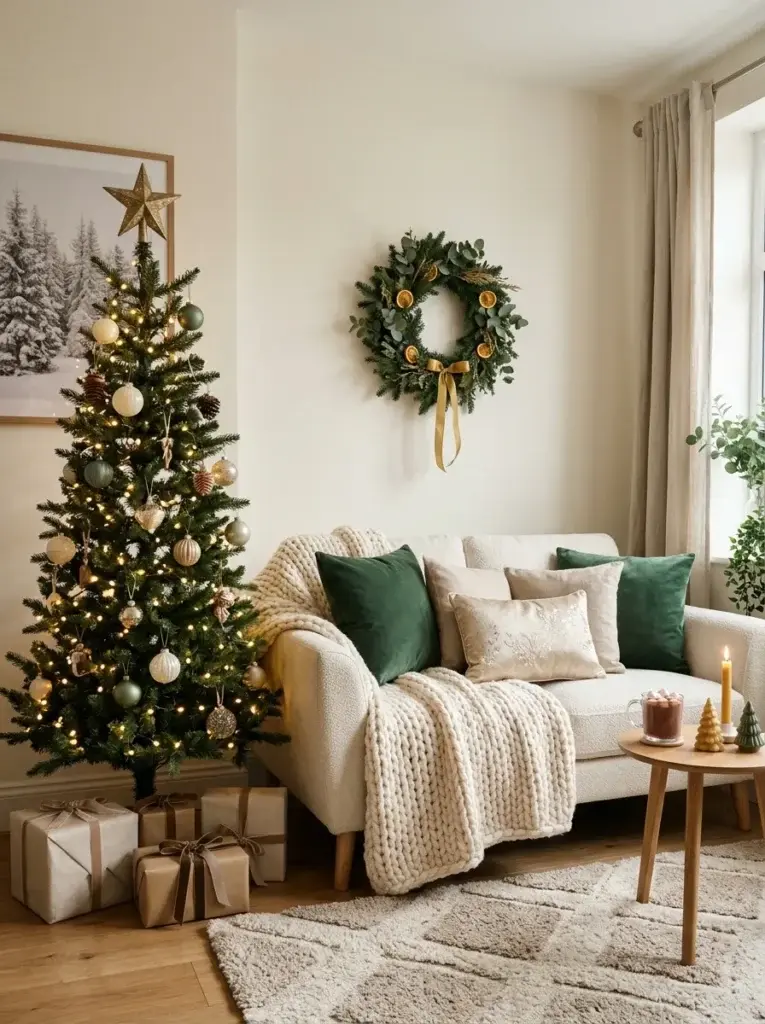
Start by selecting two or three textile colors that complement your Christmas palette. A cream knitted blanket paired with forest green cushions creates a cozy look, while one burgundy accent pillow can introduce a traditional festive touch.
Balance Comfort and Decoration
The size of your sofa should determine how many decorative cushions you use. A compact loveseat may only need two cushions and one folded throw. Larger sofas can accommodate additional accessories, but leaving some seating space clear helps the room feel more comfortable.
Consider mixing different textures instead of introducing too many patterns. Velvet, chunky knits, faux fur, and woven fabrics can create visual interest even when they share similar colors.
You can also replace an existing cushion cover rather than purchasing an entirely new collection. This is an affordable way to introduce seasonal colors while keeping your everyday furniture arrangement unchanged.
If you have a small rug, consider whether its existing color complements your decorations before replacing it. A neutral rug can provide a calm foundation for richer Christmas accessories, while a subtle patterned design can add character without overwhelming the room.
How to Bring Everything Together Into One Beautiful Christmas Living Room
Decorating individual areas is only the beginning. The real difference comes from making everything feel connected. Your Christmas tree, sofa, coffee table, lighting, and wall decorations should work together rather than compete for attention. A coordinated arrangement makes even a small living room feel thoughtfully designed.
Create One Main Focal Point
Choose one area to attract attention first. For most living rooms, this will be the Christmas tree. If you have a particularly small tree, place it where it can be seen from the entrance or main seating area. Keep surrounding decorations relatively simple so the tree remains the visual centerpiece.
You can create a second, smaller focal point with a decorated fireplace mantel, floating shelf, or coffee table. However, avoid making every corner equally decorative. Leaving some areas relatively simple gives your eyes room to rest and makes the important details more noticeable.
Balance Different Sizes and Textures
A successful arrangement combines different shapes and heights. For example, pair a tall Christmas tree with low coffee table decorations, medium-height lamps, and small ornaments. This creates visual variety without requiring additional furniture or unnecessary accessories.
Textures are equally important. Combine soft knitted blankets, natural evergreen branches, smooth ceramic decorations, wooden accessories, and metallic ornaments. These materials create a layered appearance while keeping your chosen color palette consistent.
Keep Everyday Comfort a Priority
Your Christmas decorations should improve the atmosphere rather than change how you use the room. Make sure there is enough space to sit comfortably, reach frequently used furniture, and move around without knocking over accessories.
Before considering your decorating complete, walk through the room as you normally would. Sit on the sofa, approach the coffee table, and check whether doors, drawers, and walkways remain accessible. Small adjustments can make a significant difference.
Common Christmas Decorating Mistakes to Avoid in Small Living Rooms
Even beautiful Christmas decorations can make a compact room feel uncomfortable when they are arranged without considering available space. Avoiding a few common mistakes will help you create a more balanced holiday interior.
– Choosing an oversized Christmas tree: A wide tree can dominate the room and restrict movement. Measure your available floor space before purchasing, and consider a slim or tabletop alternative.
– Using too many decorating colors: Combining several unrelated colors can make a small room appear visually busy. Choose a consistent palette and repeat those shades throughout your accessories.
– Covering every available surface: Decorating every shelf, table, and window ledge creates unnecessary visual clutter. Leave some surfaces empty so your main decorations can stand out.
– Ignoring lighting balance: Relying entirely on bright overhead lighting can make festive decorations feel less inviting. Combine soft lamps, tree lights, and a few decorative light sources.
– Blocking windows with decorations: Large arrangements can reduce natural light and make the room feel less open. Choose lightweight window decorations that preserve the available daylight.
– Buying decorations before measuring: Accessories that look small in a store can overwhelm a compact living room. Measure shelves, tables, and corners before purchasing anything.
– Forgetting everyday functionality: A decorative arrangement is not successful if it prevents comfortable seating or makes the coffee table unusable. Always prioritize practical movement and furniture access.
One helpful habit is to decorate gradually. Add your largest pieces first, then introduce smaller accessories only where they genuinely improve the arrangement. This makes it easier to recognize when the room already has enough decoration.
Budget-Friendly Christmas Decorating Ideas for Small Living Rooms
Creating a beautiful Christmas living room does not require purchasing an entirely new collection of decorations. In fact, smaller spaces often benefit from a more selective approach. A few reusable accessories, some natural materials, and thoughtful styling can create a festive atmosphere without unnecessary spending.
Reuse Decorations You Already Own
Before shopping, unpack your existing Christmas decorations and choose pieces that complement your current furniture. You might already have ornaments, fairy lights, candle holders, ribbons, or decorative baskets that can be used differently.
For example, ornaments originally purchased for a large Christmas tree can be displayed in a decorative bowl or arranged along a shelf. An unused basket can become a simple tree collar, while an ordinary glass vase can hold evergreen branches.
Try Simple DIY Decorations
Handmade accessories can introduce personality without requiring expensive materials. Consider creating small decorative arrangements using items you already have around the house.
Some affordable ideas include:
- Tie velvet or fabric ribbons around existing cushion covers.
- Arrange pinecones and evergreen branches in a simple bowl.
- Decorate an inexpensive wreath with leftover ribbon.
- Place fairy lights inside a clear glass vase.
- Use brown paper and reusable ribbon for understated gift wrapping.
- Create a small Christmas display using books and existing candle holders.
Invest in Decorations That Can Be Reused
If you decide to purchase something new, prioritize versatile pieces that can work with different decorating themes. Neutral cushion covers, simple ceramic trees, warm white fairy lights, and natural-looking garlands can be reused in future Christmas arrangements.
You can also save money by purchasing fewer but more adaptable accessories. Instead of buying several themed decorations, choose items that coordinate with your existing furniture and can be rearranged in different ways.
The best budget-friendly approach is to make thoughtful use of what you already own. A well-organized collection of familiar decorations can look just as attractive as a completely new holiday display.
FAQs on Christmas Decorating Ideas for Small Living Rooms :
1. How do you decorate a small living room for Christmas without making it look crowded?
Start with a slim Christmas tree and select a consistent color palette. Use walls, windows, and shelves for additional decorations instead of filling the floor with accessories. Keep coffee tables relatively clear, maintain comfortable walking paths, and leave some surfaces undecorated.
2. What is the best Christmas tree for a small living room?
A pencil Christmas tree is an excellent choice because its narrow shape provides a traditional Christmas appearance without occupying as much floor space as a full-width tree. Tabletop trees and wall-mounted alternatives are also useful when your living room has very limited space.
3. Which colors make a small living room look festive and elegant?
Cream, champagne gold, sage green, and warm white create a soft and elegant Christmas atmosphere. If you prefer traditional decorations, combine red, green, and warm white. The key is choosing a limited palette that complements your existing furniture and repeating those colors throughout the room.
4. How can I decorate my apartment living room for Christmas on a budget?
Reuse existing ornaments, cushion covers, baskets, and fairy lights before purchasing new accessories. You can also make simple decorations using ribbons, pinecones, evergreen branches, and glass containers. Focus on a few versatile pieces instead of buying multiple decorations that serve similar purposes.
5. How can I make my small living room feel cozy during Christmas?
Introduce warm lighting, soft blankets, comfortable cushions, and natural seasonal textures. Warm white fairy lights and a few LED candles can create an inviting atmosphere. Keep your furniture arrangement practical and avoid overcrowding the room with unnecessary accessories.
6. Where should I put a Christmas tree in a small living room?
Look for an unused corner beside the sofa, near a window, or next to an entertainment unit. Choose a location that does not interfere with doors or walking paths. Measure the available space before positioning your tree, and consider a narrow design if the room is particularly compact.
Conclusion
Decorating a small living room for Christmas is all about making thoughtful choices rather than filling every available space. A slim Christmas tree, coordinated colors, warm lighting, carefully styled surfaces, and comfortable seasonal textiles can transform a compact room into a beautiful holiday retreat.
The most successful Christmas decorating ideas for small living rooms balance festive details with everyday functionality. Start with your existing furniture, work with the space you have, and choose decorations that complement one another. You do not need a large living room or an expensive decorating budget to create a Christmas atmosphere that feels special, welcoming, and full of seasonal charm.