
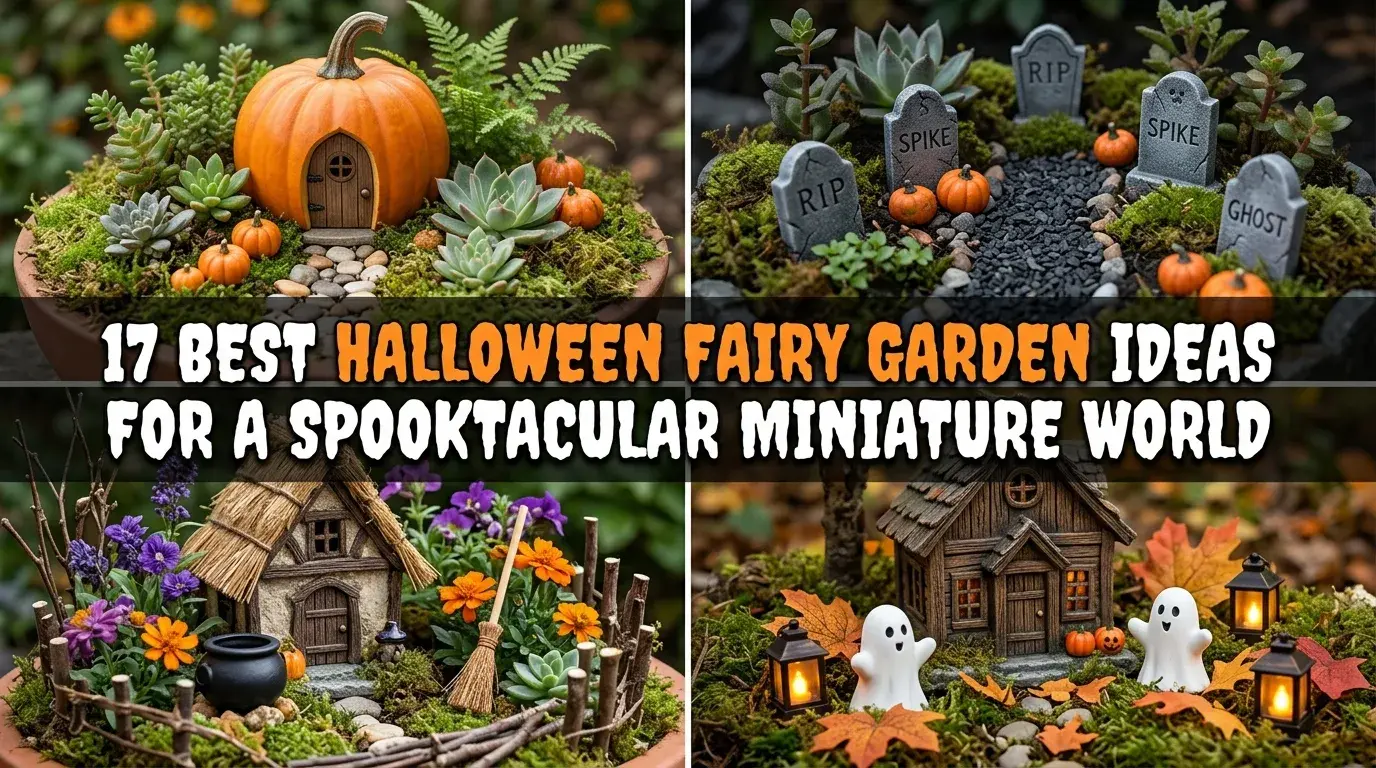
17 Best Halloween Fairy Garden Ideas for a Spooktacular Miniature World
Halloween fairy gardens bring a playful twist to seasonal decorating by transforming ordinary containers into tiny worlds filled with miniature houses, pumpkins, moss, and spooky little details. These charming displays combine gardening and creativity, making them wonderful projects for anyone who loves handmade decorations and the cozy atmosphere of autumn.
Whether you have a spacious porch, a small tabletop, or just one spare planter, these Halloween Fairy Garden Ideas offer plenty of inspiration for different budgets and decorating styles. You can build a miniature haunted village, create a friendly ghost garden, or arrange a woodland scene using accessible craft supplies and natural materials.
1. Pumpkin Fairy House
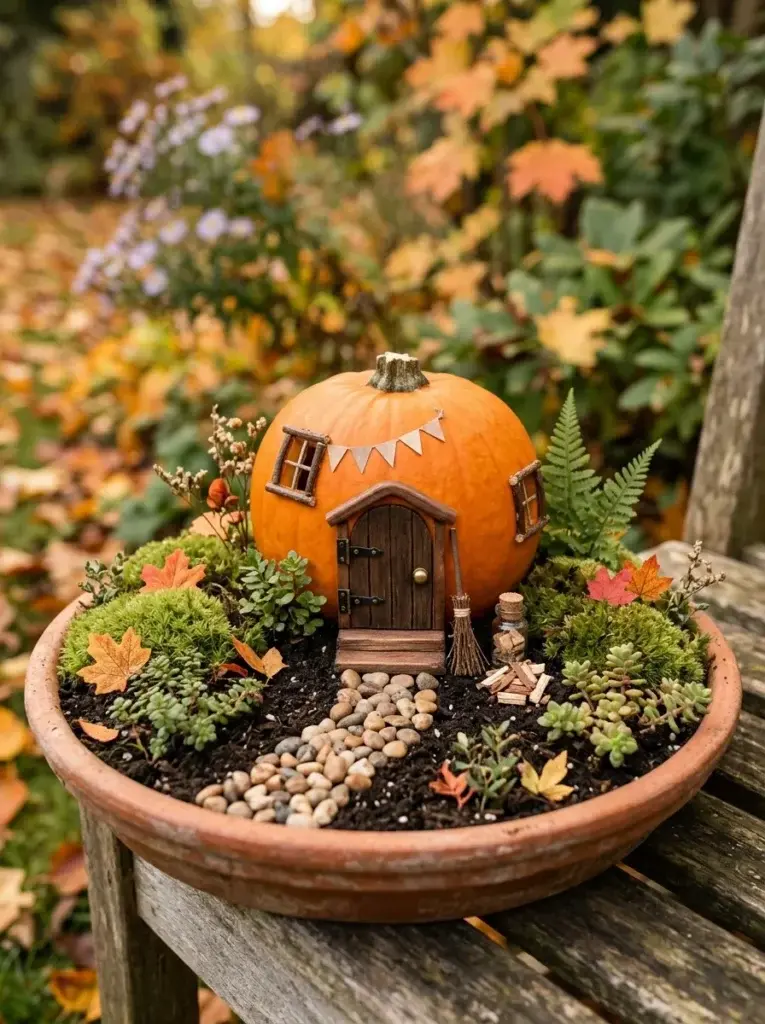
A pumpkin fairy house makes an adorable centerpiece for a Halloween miniature garden. Its rounded orange exterior immediately establishes an autumn mood, while a tiny door and miniature windows give the pumpkin a welcoming personality. Moss, small stones, and fallen leaves help the house blend naturally into its miniature landscape.
Choose a firm decorative pumpkin and attach a miniature door using a suitable craft adhesive. Arrange pebbles into a short pathway and surround the base with preserved moss and small decorative plants. For a longer-lasting display, use a faux pumpkin, which can be decorated repeatedly without worrying about natural pumpkin decay.
Professional Tip: Choose a flat-bottomed pumpkin and secure the miniature doorway firmly so the house remains stable throughout the season.
2. Haunted Graveyard Fairy Garden
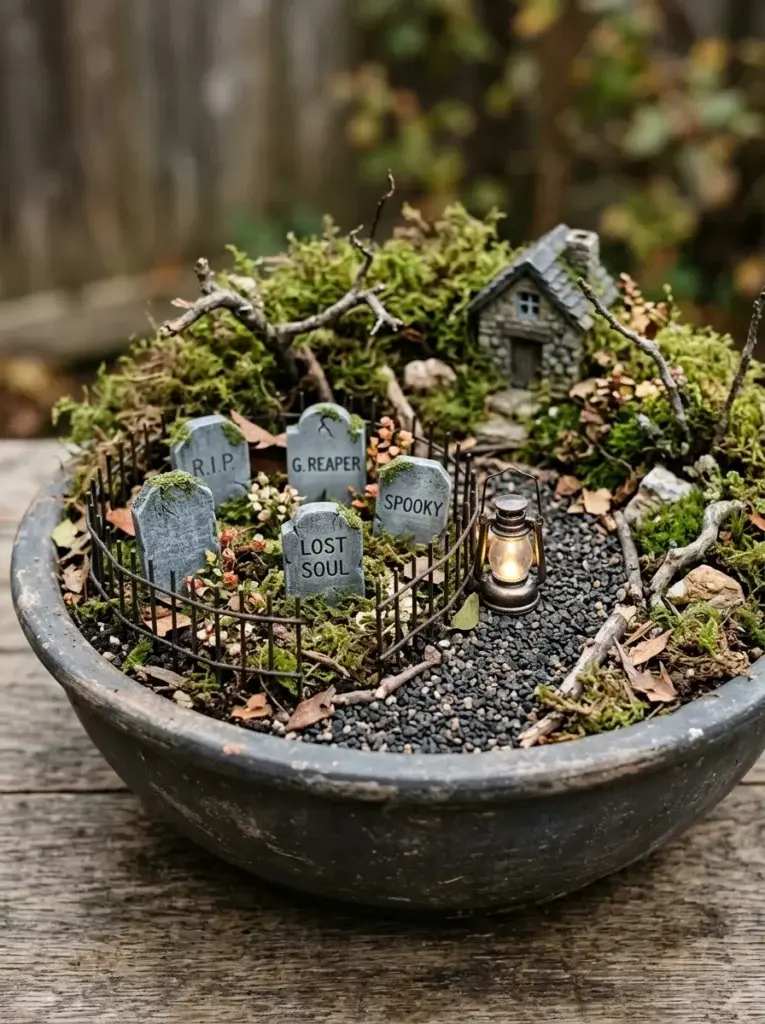
A miniature graveyard gives your Halloween fairy garden a mysterious character without requiring an elaborate structure. Small tombstones stand among dark gravel and green moss, while crooked twigs create the impression of an old, overgrown cemetery. A tiny lantern adds warmth and provides a contrasting focal point.
Make tombstones from air-dry clay, craft foam, or appropriately sized flat stones. Arrange them at varying distances instead of forming perfectly straight rows, then add gravel and moss around their bases. A shallow bowl works particularly well because it keeps the entire cemetery visible and makes the finished arrangement easy to move indoors.
Professional Tip: Keep the tombstones in proportion to the miniature house and leave narrow spaces between them to create visual depth.
3. Witchy Fairy Garden
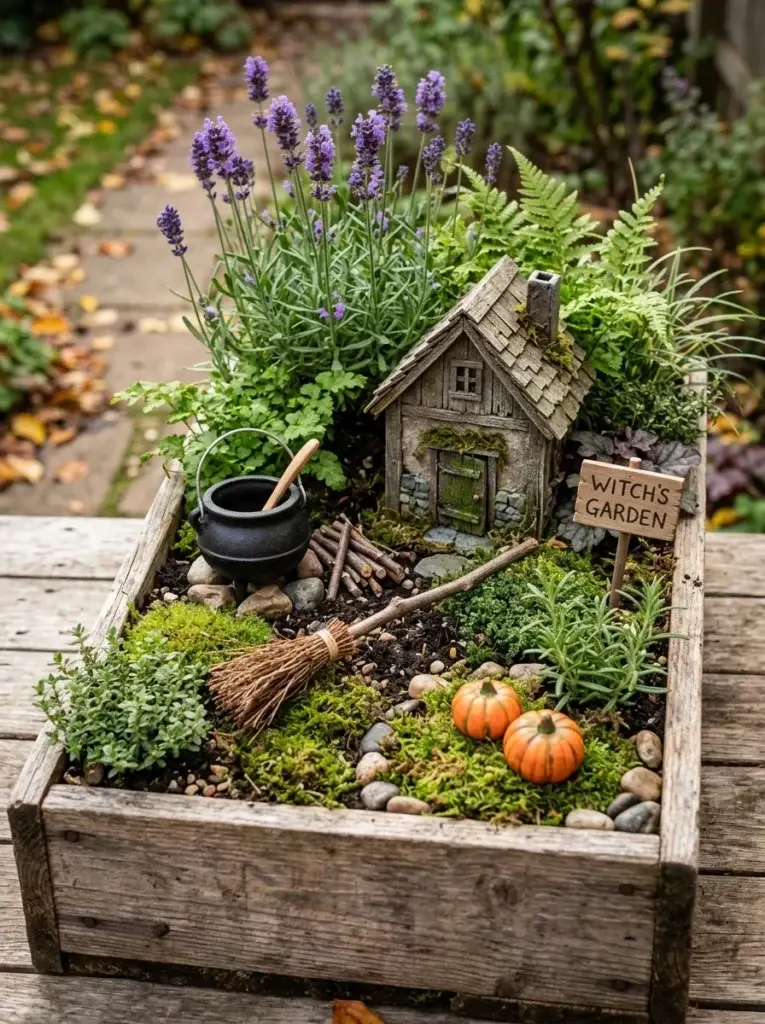
A witchy fairy garden combines botanical details with classic Halloween accessories. Purple flowers, deep green foliage, and charcoal-colored decorations create a distinctive seasonal palette, while a miniature cottage gives the arrangement a clear focal point. Small witch-inspired accessories add personality without making the scene look overcrowded.
Start with a compact planter and position the cottage toward the back. Add a tiny broom made from bundled twigs, a small cauldron-shaped craft ornament, and a few miniature herbs. Finish with moss and a narrow gravel path, using inexpensive materials wherever possible. Place the completed garden on a sheltered porch table or indoor shelf.
Professional Tip: Repeat purple and dark green in several small details to make the witch-themed display feel coordinated rather than cluttered.
4. Gothic Fairy Garden
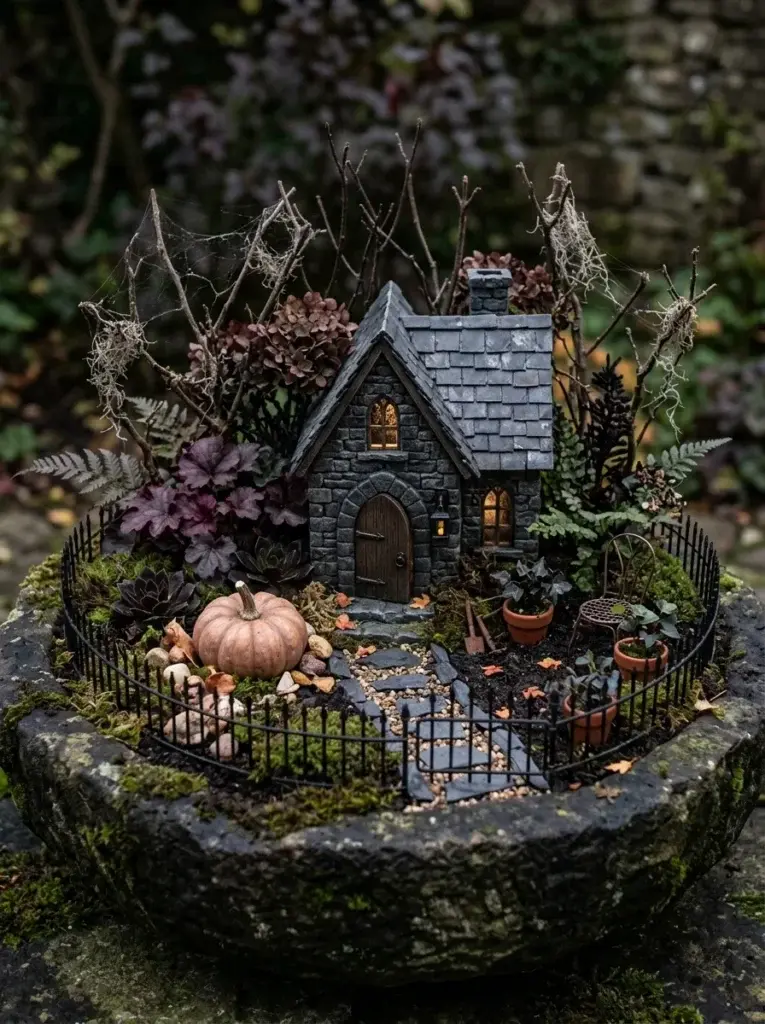
A gothic fairy garden offers a more dramatic alternative to bright Halloween decorations. Weathered gray structures, dark greenery, and deep burgundy accents establish a moody atmosphere, while an arched doorway and miniature fencing create an old-fashioned architectural character. Restrained decoration helps the garden feel thoughtfully designed.
Use a dark container as your base and choose a small cottage with an aged finish. Add charcoal pebbles, moss, and a few bare twigs to suggest an overgrown garden. Introduce one or two muted orange details for contrast, keeping the remaining decorations subdued. This design looks especially attractive beside neutral fall porch decorations.
Professional Tip: Limit the palette to three or four main colors so the gothic details remain visually striking.
5. Haunted Cottage Fairy Garden
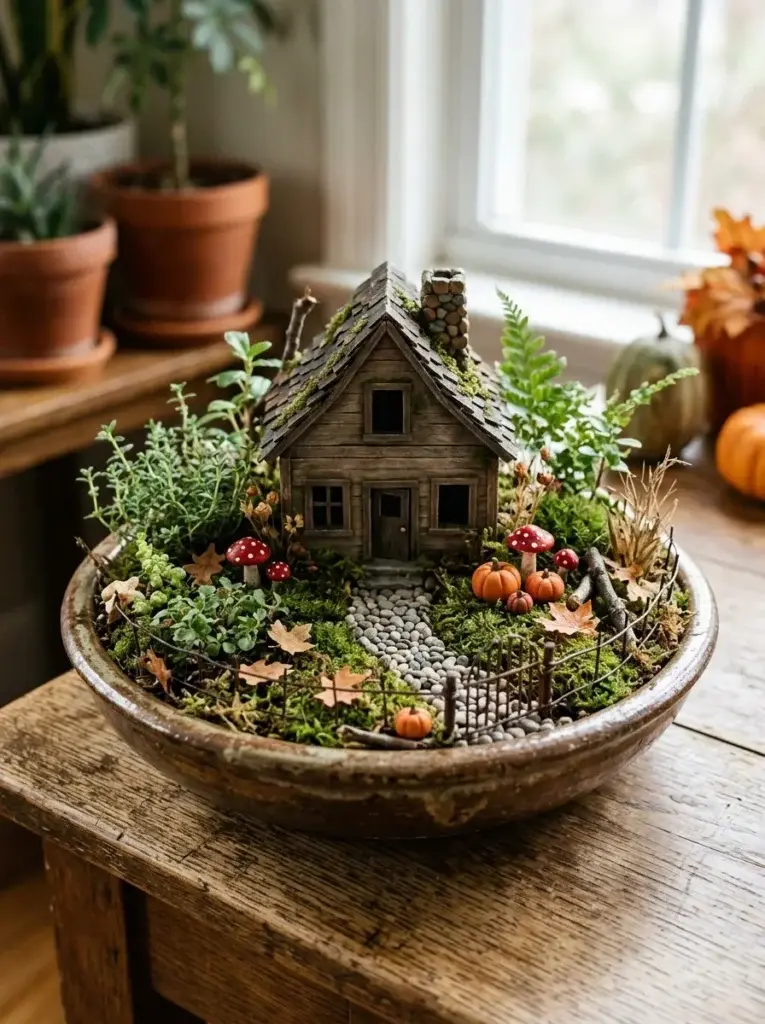
A haunted cottage garden feels like a tiny abandoned home discovered in an autumn woodland. A weathered roof, dark windows, and a winding pathway provide the spooky character, while moss and little mushrooms soften the overall appearance. Small pumpkins beside the entrance make the seasonal theme immediately recognizable.
Use a miniature wooden house or a small craft birdhouse as the foundation. Cover selected areas with preserved moss, add a stone chimney detail, and arrange a curved path using flat pebbles. Finish with mushrooms and miniature pumpkins, leaving enough space around the entrance for the cottage to remain the star of the scene.
Professional Tip: Place the cottage slightly off-center and curve the path toward its door for a more natural composition.
6. Ghost-Themed Fairy Garden
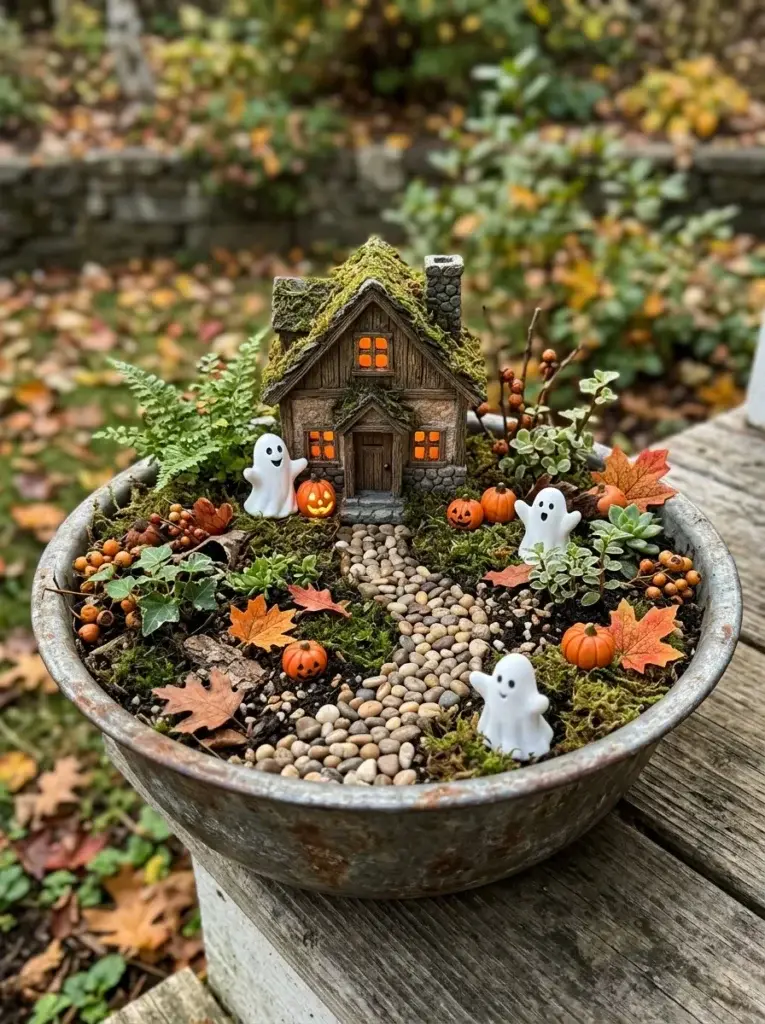
A ghost-themed fairy garden adds a lighthearted twist to spooky seasonal decorating. Small white ghost figures stand out against green moss and warm orange pumpkins, creating a cheerful contrast without relying on frightening decorations. A miniature cottage and scattered autumn leaves help the scene feel like a complete garden.
Choose small ghost ornaments made from resin, ceramic, or weather-resistant craft materials. Place them at different heights around the cottage and pathway, then add a few pumpkins and patches of moss. This arrangement works well on a windowsill, covered porch, or tabletop where the small details can be seen easily.
Professional Tip: Use white ghost decorations sparingly against darker greenery so each figure remains visible without dominating the garden.
7. Halloween Fairy Garden Planter
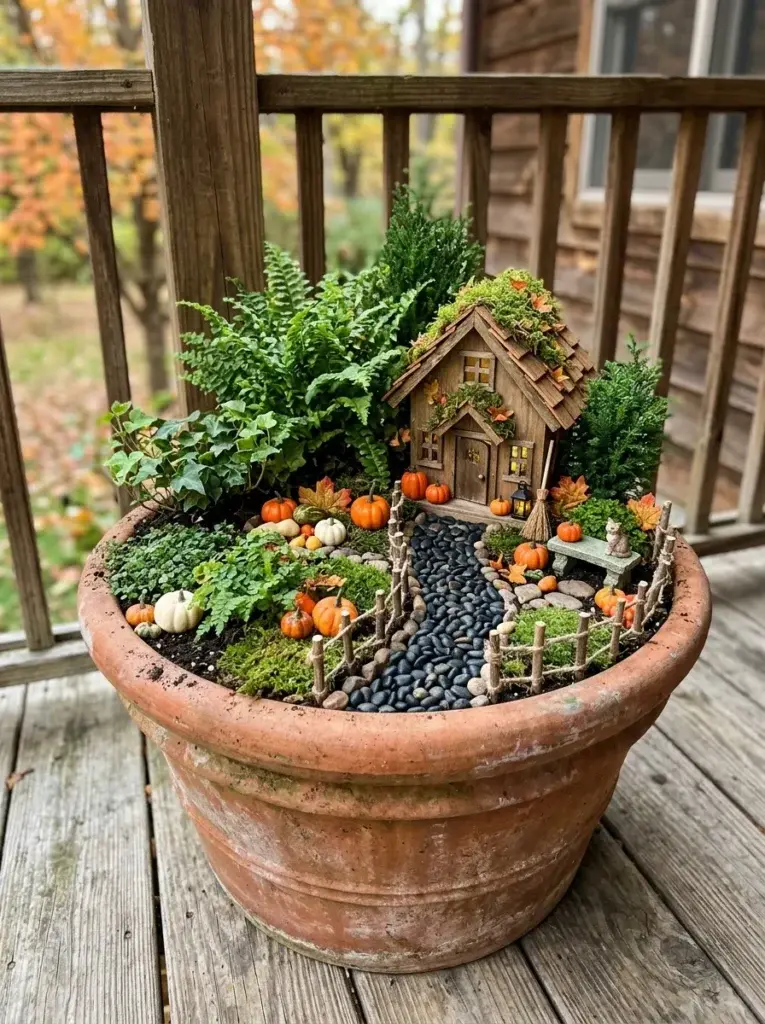
A Halloween fairy garden planter is an excellent choice when you want a seasonal display without redesigning an entire garden bed. The container creates a defined space for miniature plants, a small house, and Halloween decorations. Terracotta brings warmth, while dark pebbles and orange pumpkins introduce contrast.
Select a planter with sufficient room for the plants and accessories you want to include. If using live plants, make sure it has drainage and suitable soil. Position the miniature house at the back, arrange plants around it, and use pebbles to form a pathway. Finish with a few pumpkins and moss to connect the different elements.
Professional Tip: Choose compact plants that suit your container’s light and watering conditions, and keep decorations clear of drainage holes.
8. Pumpkin Patch Fairy Garden
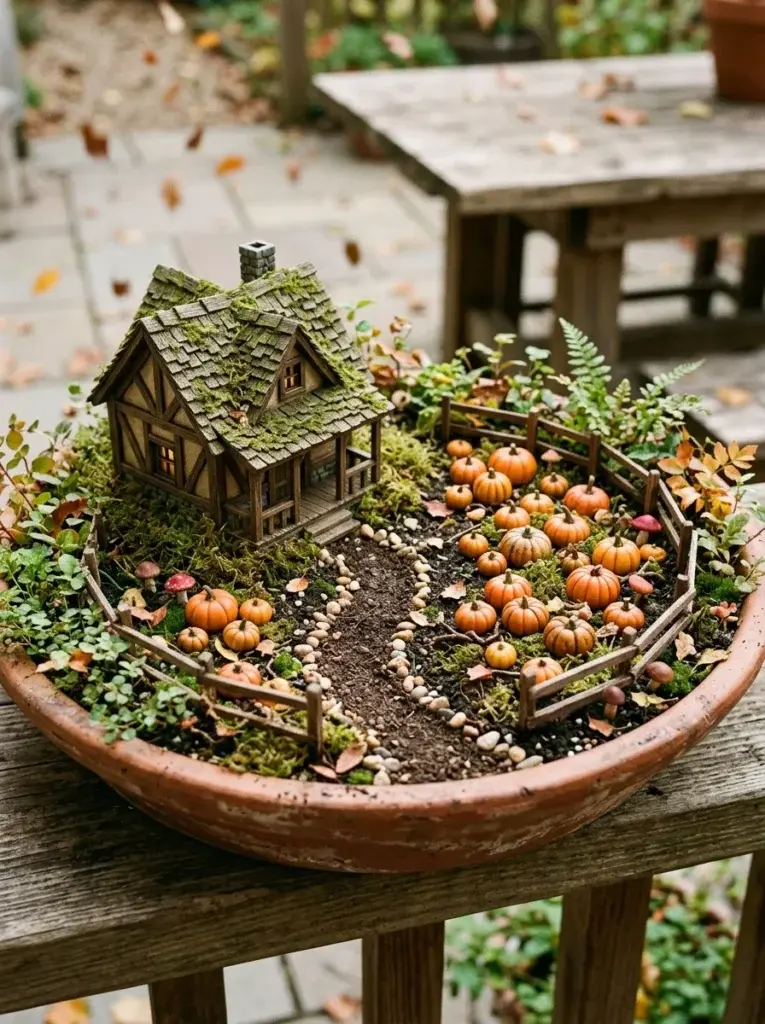
A pumpkin patch fairy garden recreates the cozy feeling of an autumn farm on a miniature scale. Several small pumpkins surround a cottage, creating a colorful focal point against green moss and earthy brown textures. A low wooden fence gives the scene a garden-like structure without requiring many additional decorations.
Use miniature faux pumpkins so the display can last throughout the season. Place a few near the cottage, cluster others along the garden edges, and add a short twig fence around one section. A handful of small plants and scattered leaves complete the landscape, making this design suitable for a porch planter or indoor seasonal centerpiece.
Professional Tip: Vary pumpkin sizes and group them in small clusters to avoid an overly uniform appearance.
9. Skeleton Fairy Garden
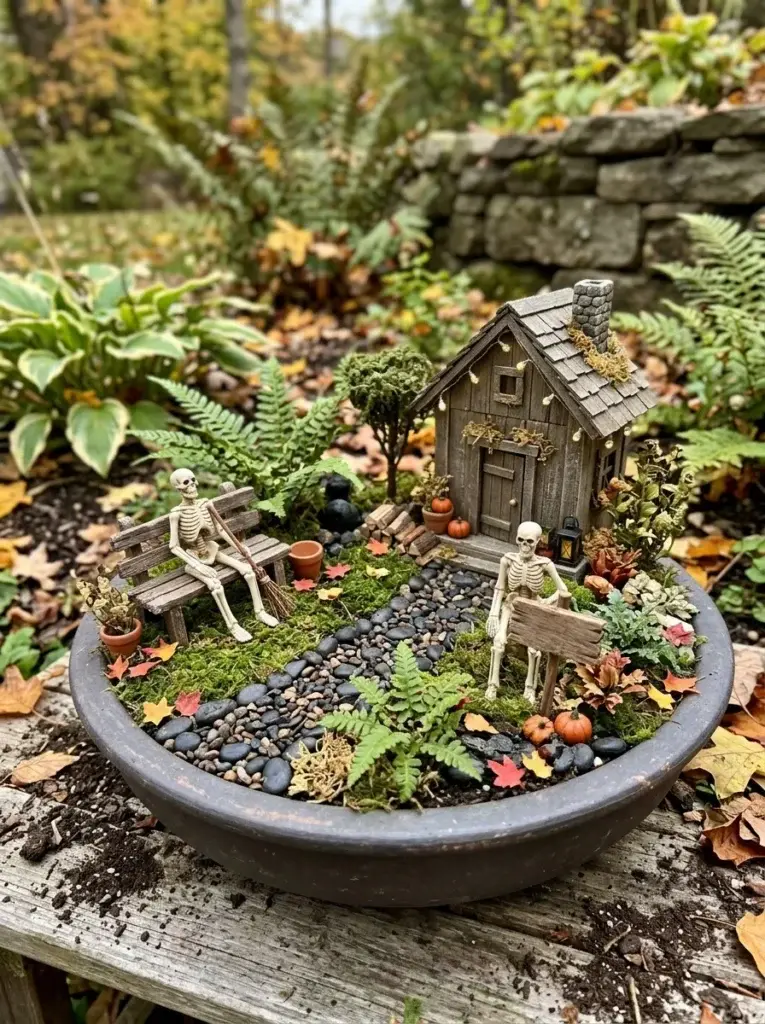
Skeleton decorations create a playful focal point in a traditional Halloween fairy garden. Small ivory figures contrast beautifully with dark stones, green moss, and miniature plants. Arranging the skeletons as though they are exploring or relaxing around a cottage gives the display a little story rather than making it look like a collection of ornaments.
Choose lightweight skeleton figurines that fit the size of your planter. Position one on a miniature bench and another beside the pathway, then add a small house and patches of moss. Keep the remaining decorations simple, using ferns and autumn leaves to soften the contrast between the pale figures and darker landscape.
Professional Tip: Secure lightweight figures with removable craft adhesive if the planter will be moved frequently.
10. Fairy Garden With Halloween Lights
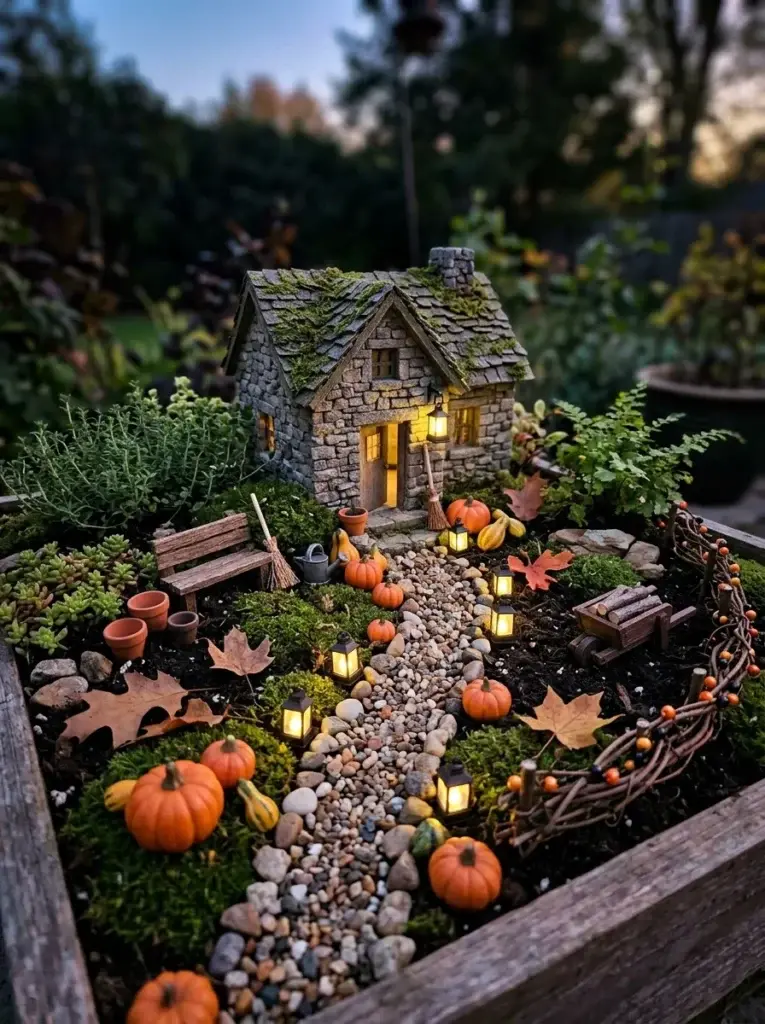
Lighting can transform an ordinary miniature garden into a charming evening display. Small warm-white lights highlight the cottage entrance, illuminate the pathway, and bring attention to the pumpkins without hiding the natural textures. The contrast between soft illumination and dark green moss creates an inviting Halloween atmosphere.
Choose battery-operated LED lanterns or miniature string lights designed for the intended setting. Arrange them around the house and path, keeping wires neatly tucked behind plants or stones. If your garden sits outdoors, use lighting suitable for outdoor conditions and keep battery compartments protected from moisture. Test the arrangement in dim light before displaying it.
Professional Tip: Use a few warm lights near focal points rather than illuminating every corner of the miniature garden.
11. Miniature Halloween Garden
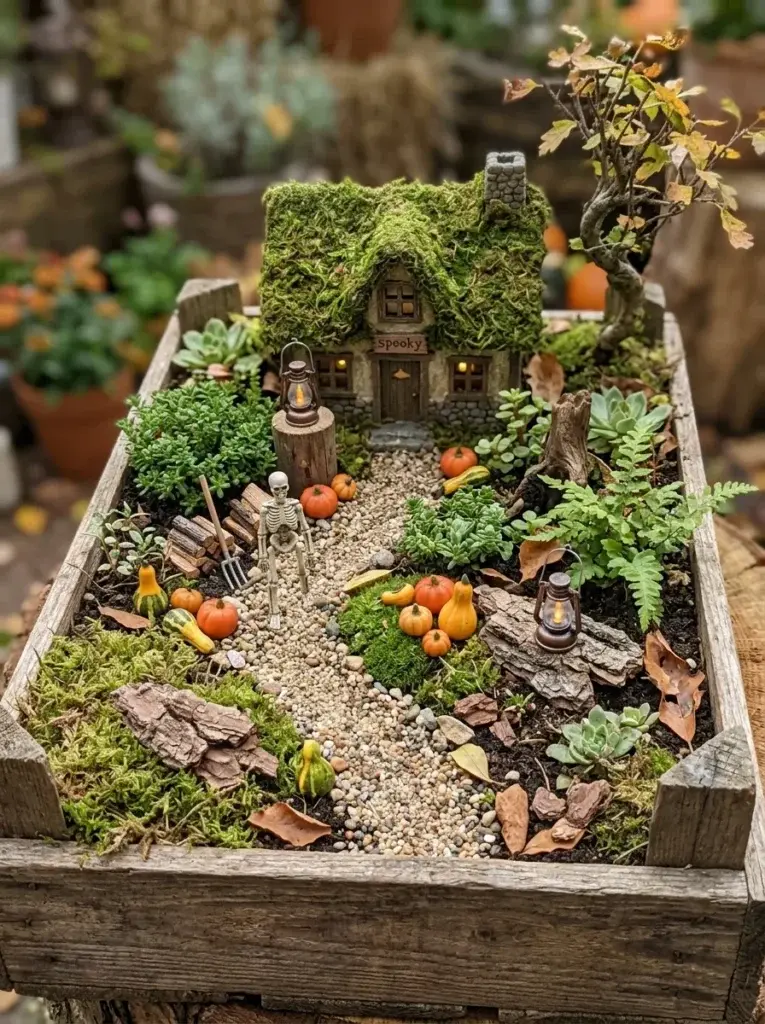
A miniature Halloween garden brings several seasonal details together in one cohesive display. A cottage establishes the main focal point, while pumpkins, tiny lanterns, and a skeleton add recognizable Halloween character. Different layers of greenery and gravel help the small arrangement feel like a complete landscape rather than scattered decorations.
Begin with a shallow wooden crate or wide planter and establish a clear focal point using a miniature house. Add a pathway through the center, then arrange plants and moss around its edges. Introduce a few Halloween accessories in the foreground and background, keeping their sizes consistent and leaving open spaces between the elements.
Professional Tip: Build the landscape from the largest structure outward, adding smaller accessories only after the basic layout looks balanced.
12. Fairy Garden With a Spooky Stone Path
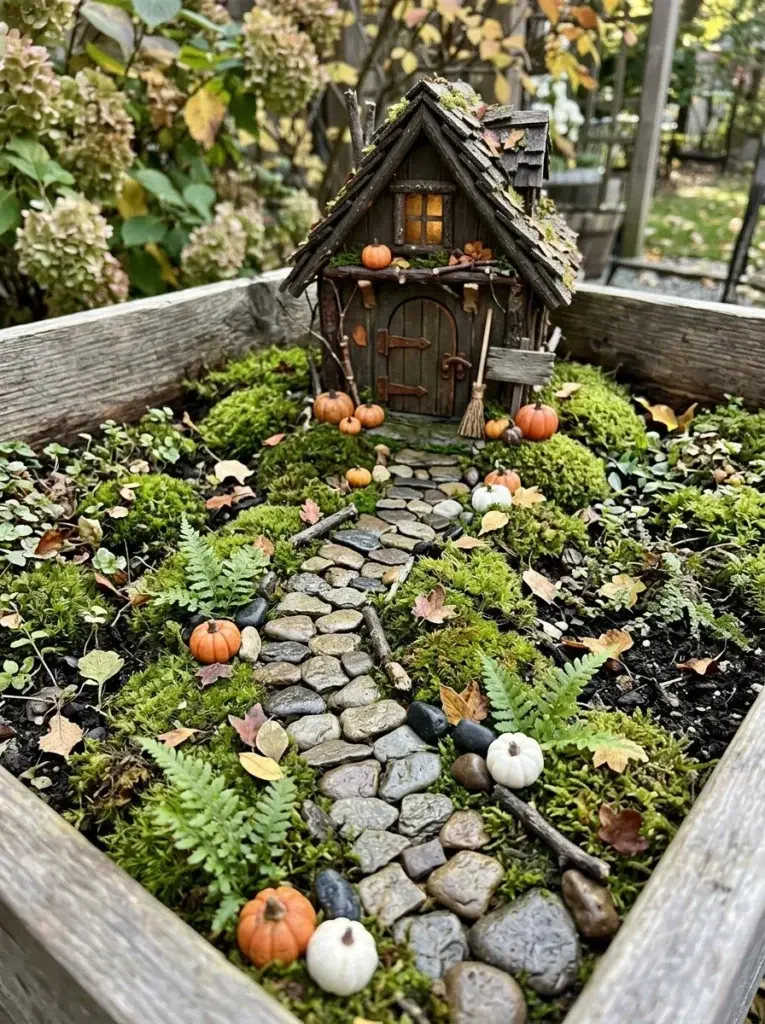
A spooky stone path makes an effective centerpiece when you want your Halloween fairy garden to feel larger than its container. The curved route guides the eye toward a tiny house, while moss and small plants soften the edges of the stones. A few pumpkins and autumn leaves introduce seasonal color.
Collect small flat pebbles and arrange them into a gently curving path over suitable soil or decorative gravel. Fill the gaps with moss and place compact plants along the edges. Position a miniature cottage at the end of the path, then add a few pumpkins or a tiny lantern to create a recognizable Halloween scene.
Professional Tip: Leave small gaps between some stones and vary their shapes to give the pathway a natural, weathered appearance.
13. Black and Orange Fairy Garden
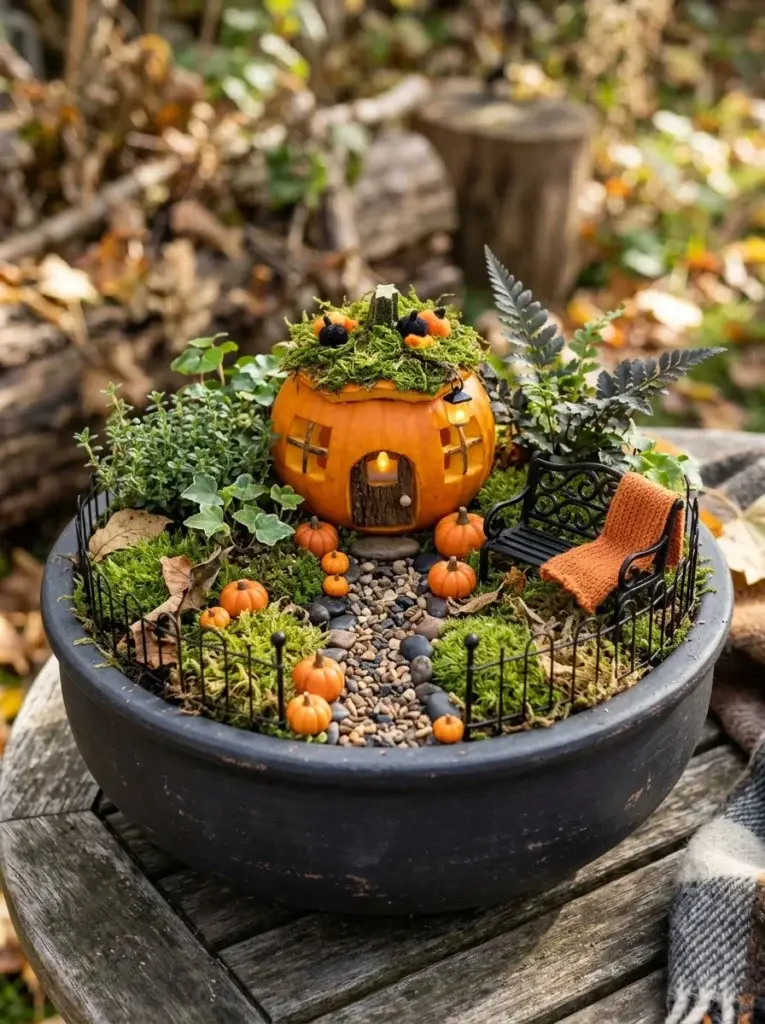
Black and orange provide an unmistakable Halloween palette that can look polished when balanced with natural greenery. An orange pumpkin house draws attention, while a black bench and miniature fence introduce darker accents. Moss, pebbles, and small plants keep the arrangement connected to its garden setting.
Start with a dark planter and choose one orange centerpiece, such as a miniature pumpkin house. Add a black bench or fence, then arrange moss and small plants around the structures. Scatter two or three smaller pumpkins across the scene, using dark stones to create visual continuity without filling every available space.
Professional Tip: Let orange decorations provide the main color contrast and use black accessories to frame the focal point.
14. Spooky-Cute Fairy Garden
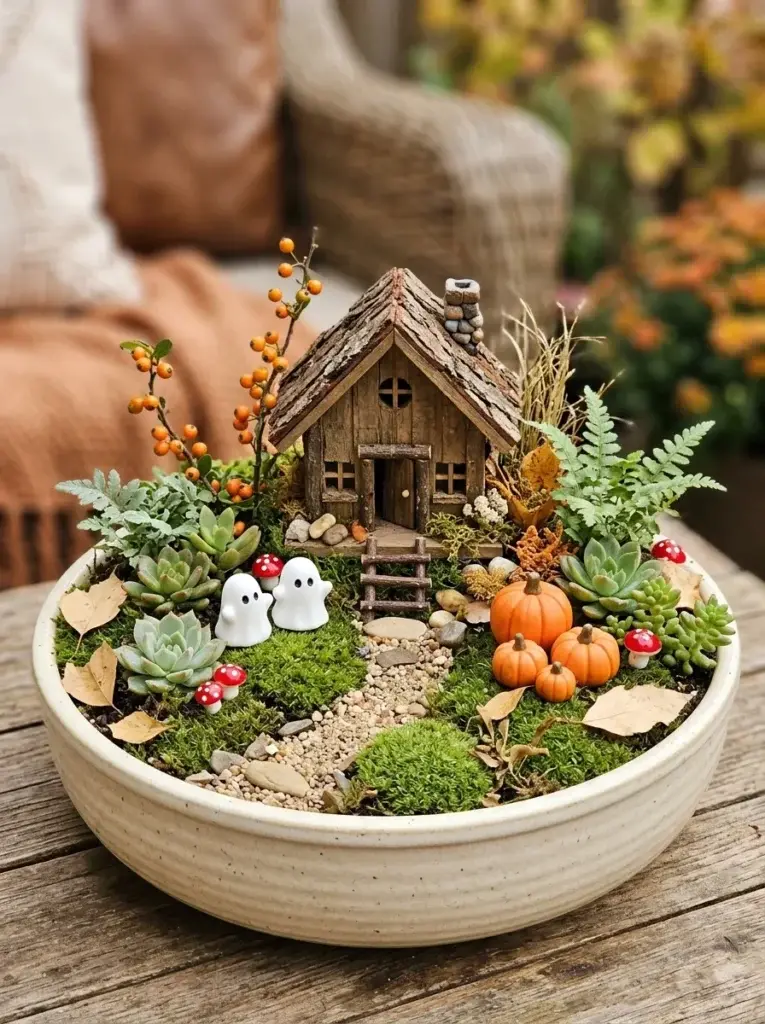
A spooky-cute fairy garden is ideal for anyone who enjoys Halloween decorating without an overly dark aesthetic. Friendly ghosts, rounded pumpkins, and colorful mushrooms create a cheerful miniature scene, while natural wood and sage-green foliage maintain a cozy cottage-garden feeling. The combination feels seasonal without overwhelming a small space.
Choose a small cottage and arrange it among preserved moss and compact plants. Add two ghost figurines, several miniature pumpkins, and a few mushrooms for texture. A cream or light terracotta container complements the softer color palette, making this design particularly suitable for indoor tabletops, covered porches, and family-friendly seasonal displays.
Professional Tip: Combine pale decorations with muted greenery and warm orange accents for a softer, more coordinated Halloween look.
15. Mossy Halloween Fairy Garden
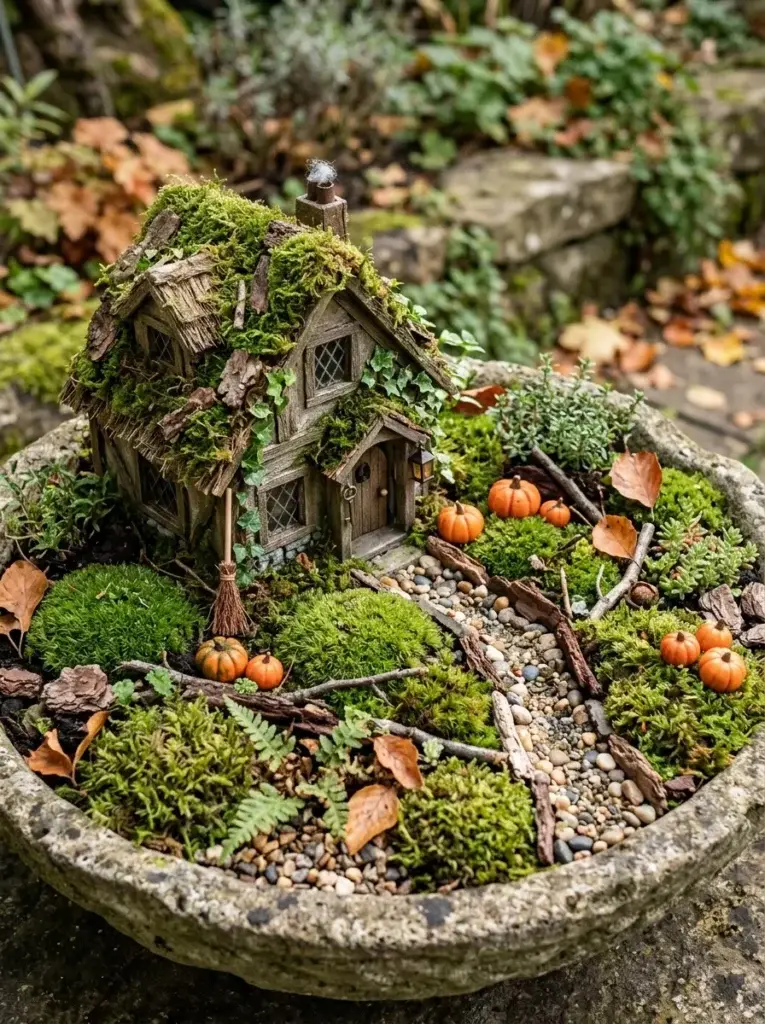
Moss creates the appearance of an established woodland landscape, making it especially effective for Halloween fairy gardens. Its rich green texture contrasts with weathered wood, dark stones, and orange pumpkins. A partially moss-covered cottage looks as though it belongs in an old garden that has slowly become overgrown.
Begin with a small cottage and use preserved moss around its base and along the pathway. Add bark pieces, twigs, and stones to introduce varied textures. Place miniature pumpkins near the house, leaving some areas of moss uncovered so the landscape looks natural. If using living moss, check its moisture and light requirements before placing it in a container.
Professional Tip: Mix different natural textures, but avoid covering doors, windows, or other details that make the miniature house recognizable.
16. Haunted Forest Fairy Garden
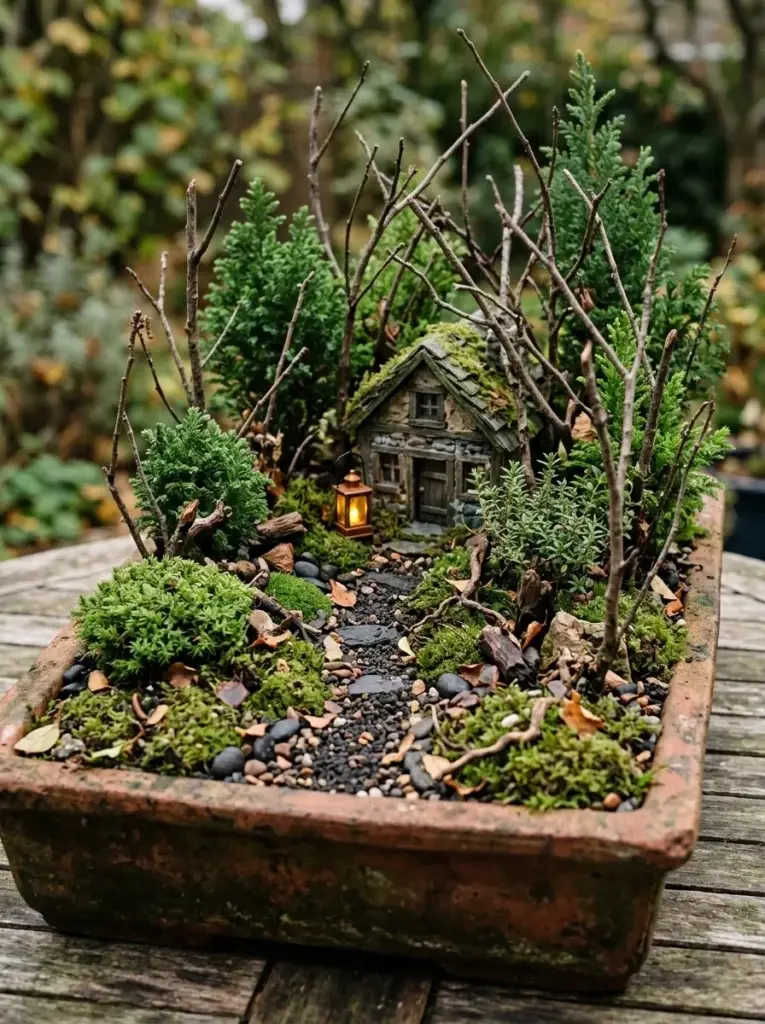
A haunted forest garden creates a mysterious Halloween atmosphere by using layers of greenery and partially concealed details. Taller plants resemble tiny trees, while bare branches suggest an autumn woodland. A cottage hidden among the foliage gives visitors something to discover, and a winding pathway adds depth.
Choose a deeper planter that can accommodate compact plants and a miniature house. Position taller greenery and branches toward the back, then conceal part of the cottage behind the foliage. Arrange moss and stones around the foreground, allowing the path to curve out of sight. Finish with a small lantern or pumpkin near the house.
Professional Tip: Use plants of different heights to create depth, but leave the cottage partially visible so it remains an identifiable focal point.
17. Halloween Fairy Garden With Tiny Tombstones
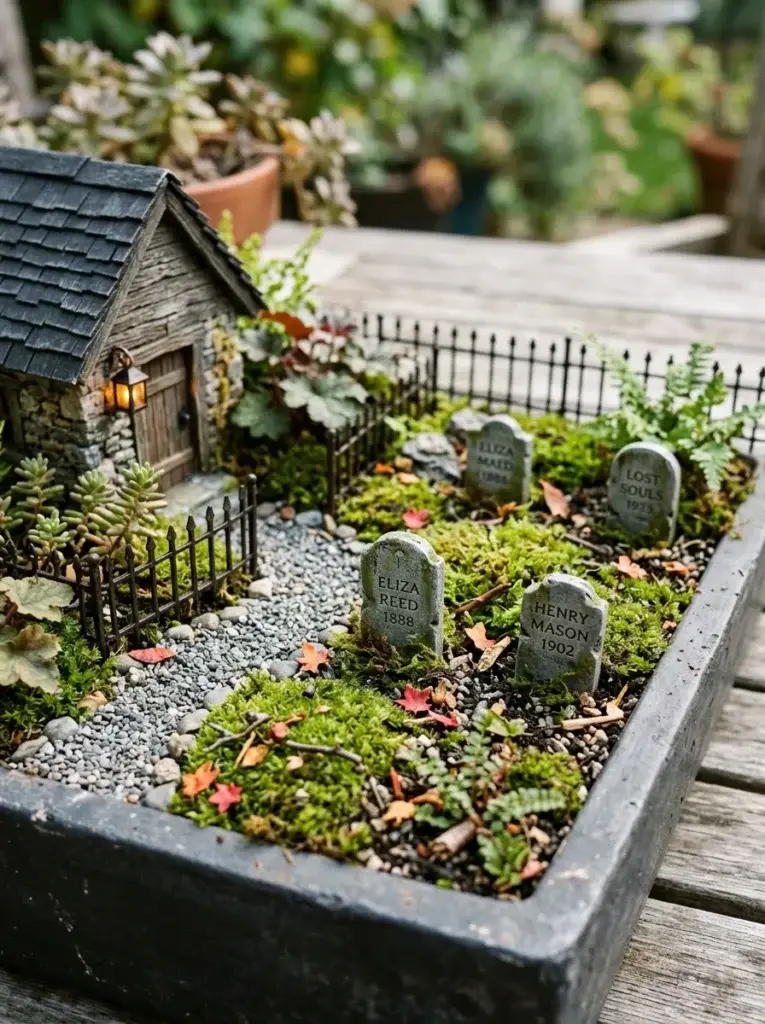
Tiny tombstones are an easy way to give an existing fairy garden a Halloween makeover. Their weathered gray surfaces stand out against green moss and dark gravel, while a small cottage keeps the cemetery connected to the wider miniature landscape. A lantern introduces a warm accent without diminishing the spooky atmosphere.
Use air-dry clay, craft foam, or small flat stones to make tombstones in a few different shapes. Position them beside a miniature pathway and secure their bases with soil or decorative gravel. Add moss around the edges, then introduce a short fence and a tiny lantern if space allows. This design works especially well in an existing cottage garden.
Professional Tip: Use lightweight, weather-resistant tombstones for outdoor displays and secure each piece so wind or watering cannot dislodge it.
FAQs Halloween Fairy Garden Ideas
1. How do you make a Halloween fairy garden?
Choose a shallow planter, suitable soil, compact plants, and a miniature house or pumpkin centerpiece. Arrange moss, pebbles, and a winding pathway around the focal point, then add a few Halloween decorations such as tiny ghosts or pumpkins. Keep the objects proportional and provide proper drainage if growing live plants.
2. What materials work best for a miniature Halloween garden?
Useful materials include planters, potting soil, preserved moss, pebbles, bark, twigs, miniature houses, faux pumpkins, and small Halloween figurines. Air-dry clay and craft foam work for lightweight decorations. Choose weather-resistant materials for outdoor displays, and use battery-operated LED lights rather than open flames near plants or craft materials.
3. Can you make a Halloween fairy garden in a small container?
Absolutely! A teacup, shallow bowl, small terracotta pot, or compact wooden box can hold a charming miniature Halloween garden. Choose one main feature, such as a pumpkin house or tiny haunted cottage, then add a little moss, a short pathway, and two or three small decorations to complete the scene.
4. How can you make a fairy garden look spooky without spending much?
Repurpose existing pots, collect suitable pebbles and twigs, and use leftover craft materials to create miniature pathways, fences, and tombstones. Add one inexpensive Halloween figurine or a small faux pumpkin as your focal point. Reusing existing decorations and limiting purchases helps create an attractive display on a budget.
5. How do you protect a Halloween fairy garden outdoors?
Choose a sheltered location and secure lightweight decorations against wind. Use weather-resistant accessories and outdoor-rated lighting, and check the container’s drainage regularly. Protect moisture-sensitive materials from rain, remove damaged decorations promptly, and water living plants according to their needs. Bring vulnerable pieces indoors during severe weather to extend their lifespan.
Conclusion
Halloween fairy gardens turn simple containers into delightful miniature seasonal displays filled with spooky cottages, tiny pumpkins, moss, and charming decorations. These 17 Halloween Fairy Garden Ideas offer inspiration for every budget and space, from a tiny tabletop arrangement to a layered woodland planter. Choose your favorite design and personalize it with materials you already have.