
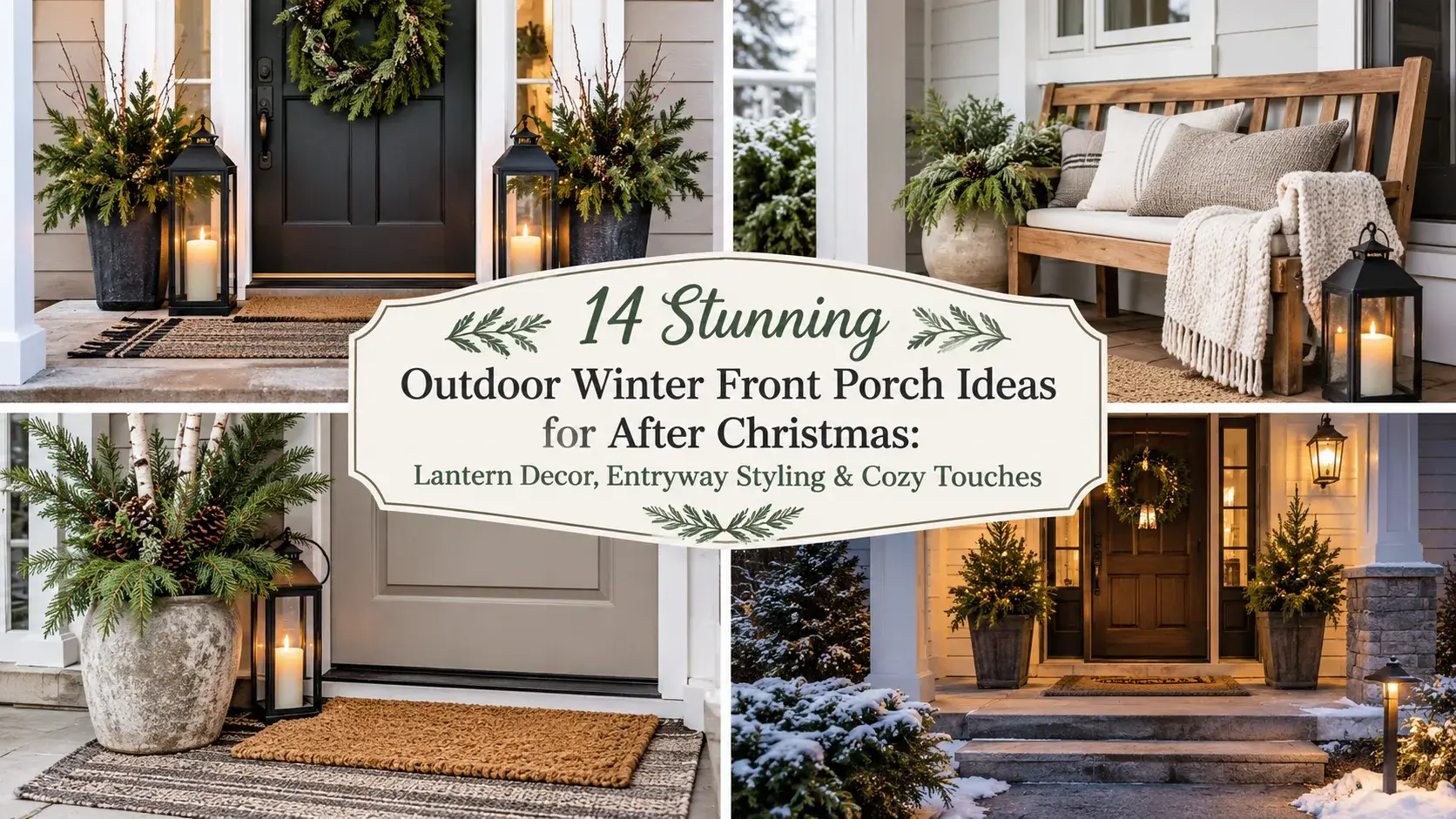
14 Stunning Outdoor Winter Front Porch Ideas for After Christmas: Lantern Decor, Entryway Styling & Cozy Touches
After Christmas, a front porch can feel unexpectedly bare once holiday lights, wreaths, and festive decorations come down. The good news is that outdoor winter front porch ideas can keep your entryway beautiful throughout January and February. With a few thoughtful changes, you can create a welcoming space that feels seasonal without looking like Christmas.
Lanterns, evergreen branches, weather-resistant planters, natural wood, and soft neutral textures make winter decorating simple and versatile. Whether you have a spacious entrance or a tiny front stoop, these practical styling ideas will help you create a cozy winter porch that complements your home’s architecture and remains attractive throughout the colder months.
1. Elegant Black Lanterns with Warm Winter Candlelight
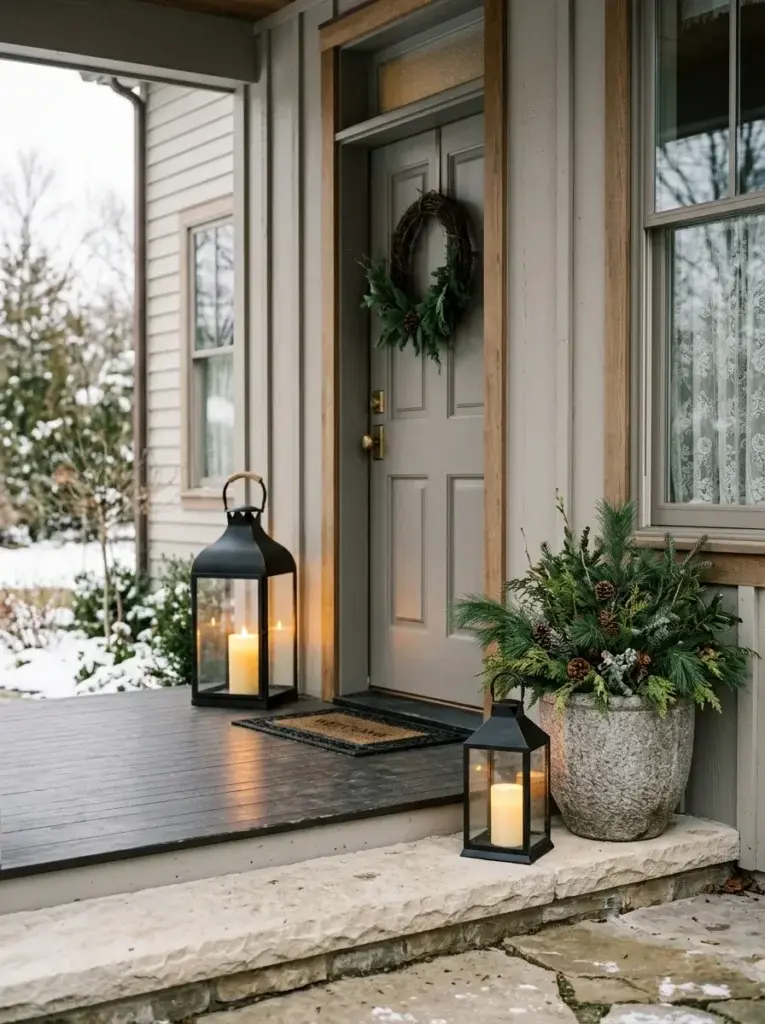
Black lanterns instantly add structure and sophistication to an outdoor winter front porch. Their dark frames contrast beautifully with pale siding, natural stone, and evergreen foliage, creating an elegant entryway that does not depend on holiday decorations. Choose different lantern heights to give the arrangement dimension while keeping the doorway open and accessible.
Warm LED candles create a gentle glow during darker winter afternoons and evenings. Battery-operated versions eliminate open flames and are convenient for sheltered entrances, while outdoor-rated lanterns help protect decorative elements from moisture. Pair the lanterns with a simple doormat and restrained greenery for a balanced, welcoming appearance.
Professional Tip: Select lanterns with drainage or ventilation where appropriate, and check their outdoor suitability before placing them in exposed areas. Use outdoor-rated battery-operated candles, secure lightweight decorations against wind, and position lanterns away from door swings, stairs, and walking paths.
2. Cozy Layered Doormats and a Neutral Winter Welcome
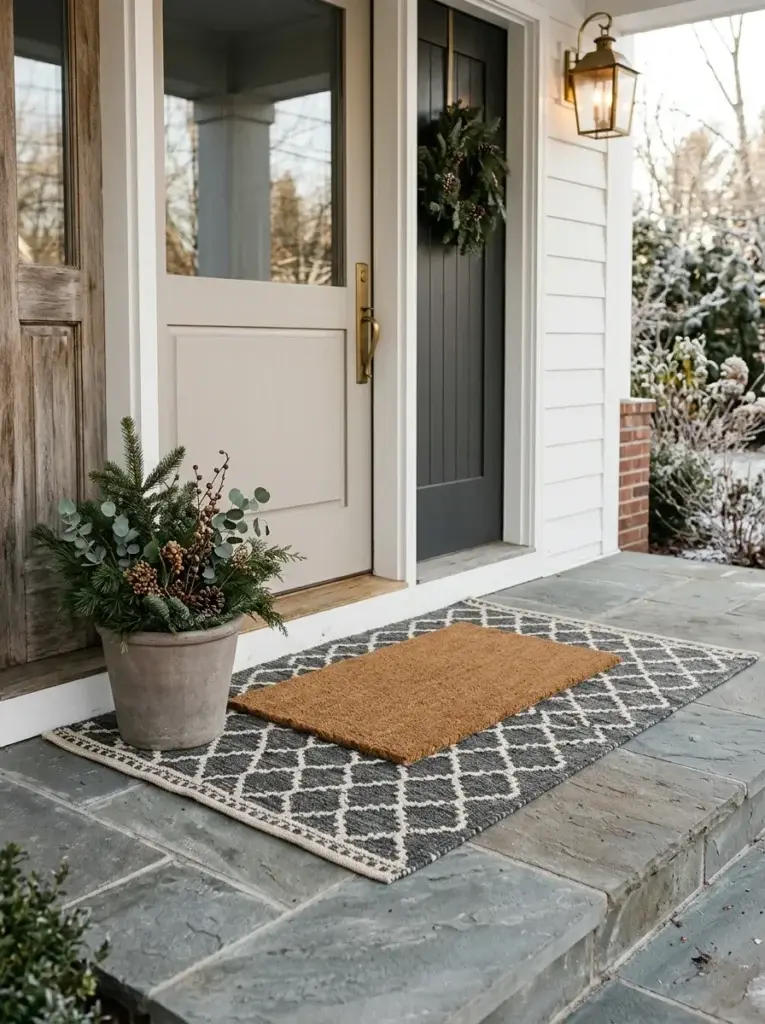
Layered doormats are an easy way to make an entryway feel finished after Christmas decorations disappear. Start with a generously sized outdoor rug in charcoal, taupe, or cream, then place a smaller coir mat on top. The combination adds depth without requiring large planters or additional decorative furniture.
For a practical winter welcome, choose materials that can handle regular foot traffic and occasional dampness. A low-profile arrangement helps doors open smoothly, while a textured surface can catch loose dirt before it enters the home. Keep the surrounding decor simple so the layered mats remain the focal point.
Professional Tip: Measure the available space before purchasing rugs, and test the door clearance with both layers in place. Choose a nonslip outdoor rug pad suitable for your porch surface, and lift the mats periodically to remove trapped moisture and debris.
3. Evergreen Porch Planters with Pine, Cedar, and Birch Branches
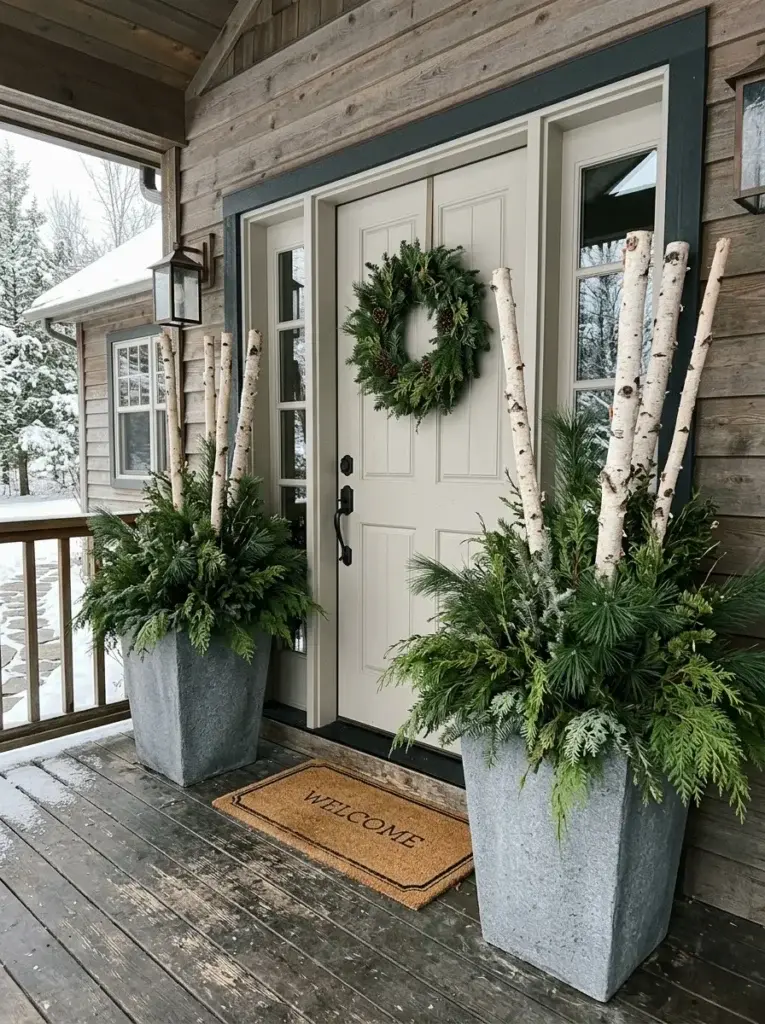
Evergreen porch planters bring color and natural texture to an entrance when surrounding gardens look dormant. Combine pine and cedar for varied foliage, then add birch branches for height and a sculptural silhouette. Stone-look containers or sturdy ceramic planters complement traditional and contemporary homes without making the arrangement feel overly decorative.
Arrange taller branches toward the center or back of each container, then tuck shorter evergreen cuttings around the edges. This layered approach creates fullness while leaving the doorway visible. Choose locally appropriate plant material, and check that branches remain secure during windy weather or periods of freezing temperatures.
Professional Tip: Use a stable planter with adequate drainage and a heavy base if your porch is exposed to strong winds. For cut greenery, keep stems supported in a suitable outdoor arrangement medium and replace brittle or discolored branches to maintain a fresh appearance.
4. A Minimalist Winter Wreath with Natural Greenery
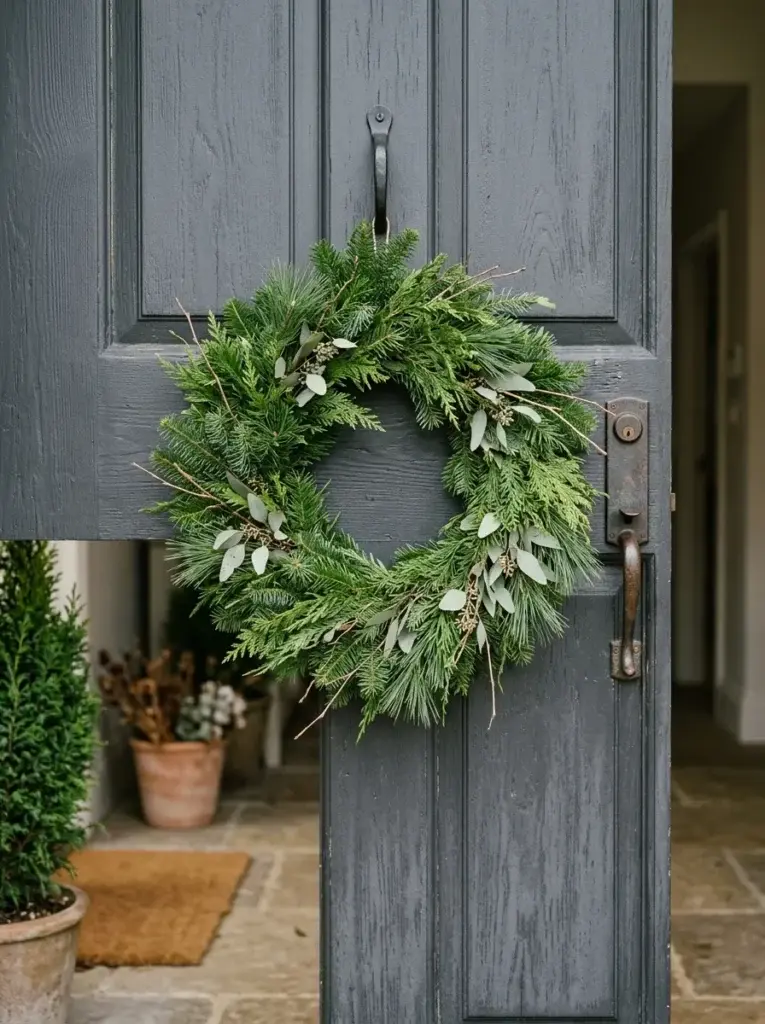
A minimalist winter wreath provides a simple focal point after Christmas without making the entrance feel unfinished. Choose a design built around natural evergreen foliage, delicate twigs, or restrained eucalyptus accents. Its organic shape softens a plain door, while a limited color palette works with contemporary, farmhouse, and traditional exterior styles.
For a lasting seasonal look, avoid oversized ornaments, bright holiday ribbons, and strongly Christmas-specific embellishments. A naturally asymmetrical wreath can feel relaxed and modern, particularly against a dark door or warm wood finish. Select a wreath suitable for outdoor exposure, and consider a sheltered position to preserve delicate foliage.
Professional Tip: Before hanging the wreath, confirm that the attachment method is appropriate for your door’s finish and the wreath’s weight. A weather-resistant over-door hanger or suitable exterior hook can reduce damage, while a sheltered doorway helps protect natural materials from rain and strong winds.
5. Symmetrical Front Door Styling with Matching Planters
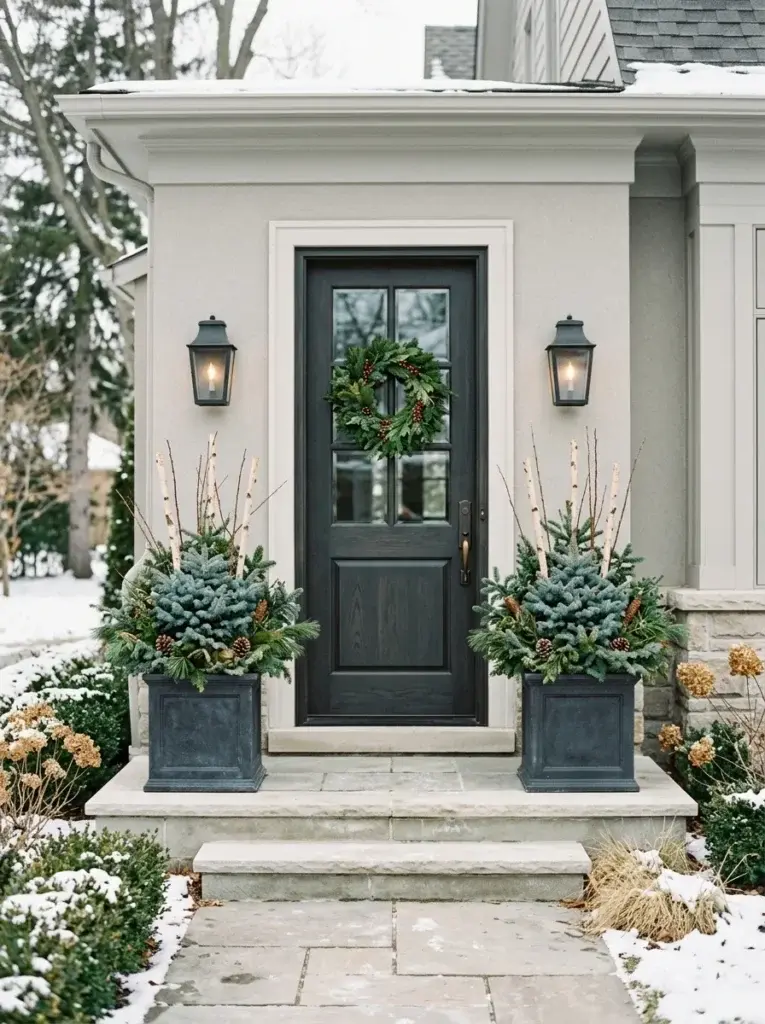
Symmetrical entryway styling creates an orderly, polished appearance without requiring elaborate seasonal decorations. Place matching planters on opposite sides of the front door, using similar evergreen arrangements to establish visual balance. This approach works particularly well with traditional homes, formal entrances, and doorways framed by columns or architectural trim.
Keep the remaining accessories understated so the greenery and entrance remain the main attractions. Coordinating planter finishes with existing door hardware or exterior lighting creates continuity, while natural foliage introduces softness. Leave sufficient room around the steps and doorway to accommodate deliveries, guests, and everyday movement during winter.
Professional Tip: Measure the entrance before positioning the planters, especially if the porch is narrow. Matching containers do not need identical plant shapes, but their overall height and visual weight should feel similar. Secure lightweight branches and choose containers stable enough for exposed winter conditions.
6. Rustic Wooden Lanterns and Natural Winter Textures
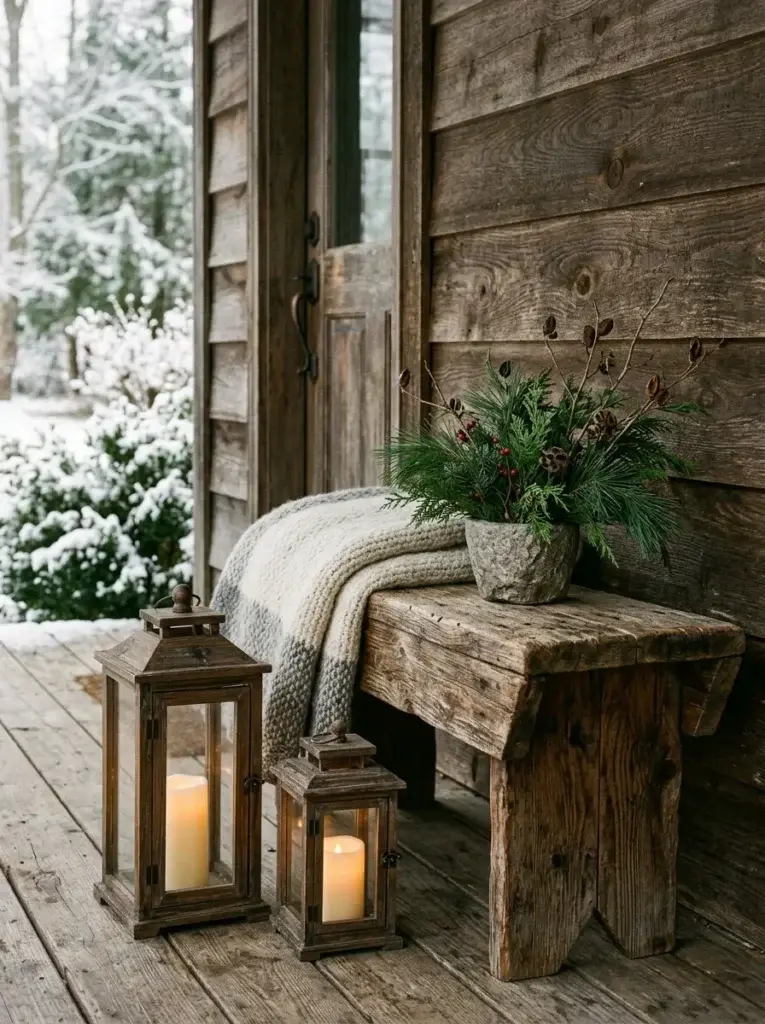
Wooden lanterns introduce warmth and texture to a porch that might otherwise feel cold during winter. Their natural grain complements stone steps, timber benches, and muted exterior finishes. Pair one lantern with a smaller wooden accessory to create a compact decorative grouping without overcrowding the entrance.
For outdoor use, select weather-resistant construction or place delicate wooden pieces beneath a covered porch roof. Warm LED candles highlight the wood’s texture, while understated greenery adds a fresh seasonal accent. This combination creates a relaxed, rustic atmosphere that feels appropriate throughout winter rather than belonging to a single holiday.
Professional Tip: Check whether wooden lanterns are designed for outdoor conditions before exposing them to rain or snow. Apply an appropriate exterior finish if the manufacturer permits it, and choose battery-operated candles specifically suited to the intended environment. Keep the arrangement away from drainage channels and frequently splashed surfaces.
7. Oversized Statement Lanterns on Front Porch Steps
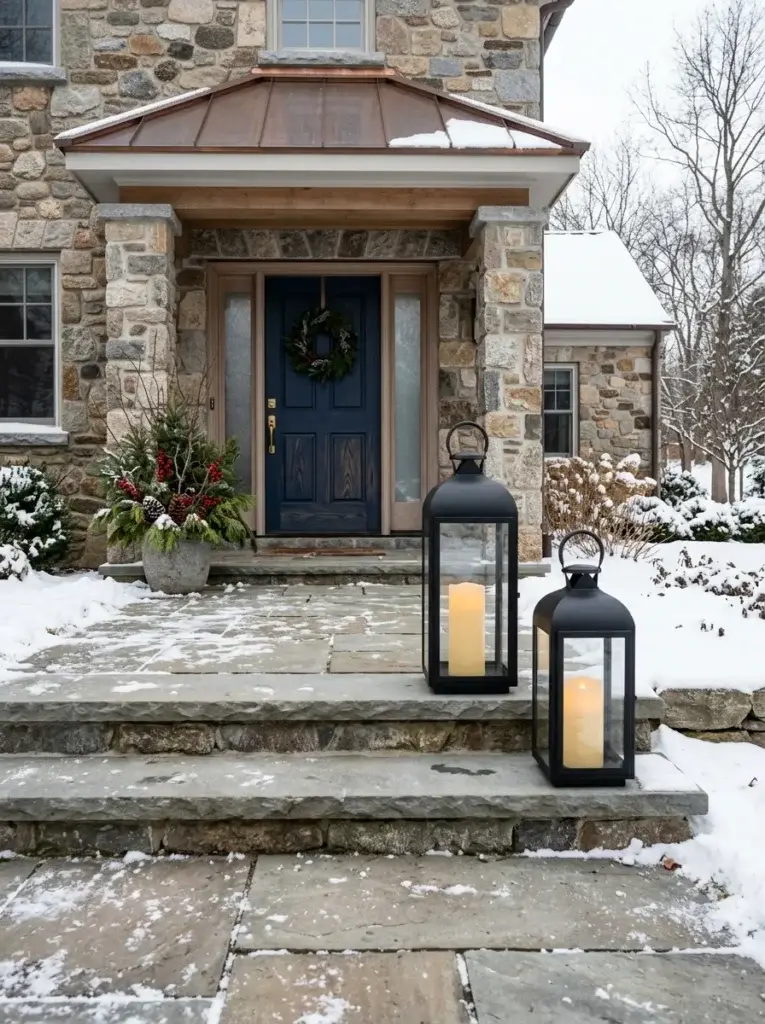
Oversized lanterns create a striking focal point when a front entrance has broad steps or a generous landing. Their scale makes a few carefully chosen accessories feel intentional, eliminating the need for numerous small decorations. Black metal finishes contrast with pale stone, while clear glass keeps the arrangement visually light.
Place the largest lantern near a stable wall or substantial planter, then use a smaller companion to establish height variation. Warm battery-operated candles provide a welcoming glow after sunset. Most importantly, keep the stairs and landing clear enough for comfortable movement, particularly when wet leaves, frost, or snow affect the surface.
Professional Tip: Never place decorative lanterns where they narrow the usable width of steps or obstruct a handrail. Use stable, weather-suitable models, secure them against wind when necessary, and check the surrounding surface for ice. For frequently used entrances, prioritize safe footing over decorative symmetry.
8. Cozy Winter Seating with Neutral Outdoor Pillows and Throws
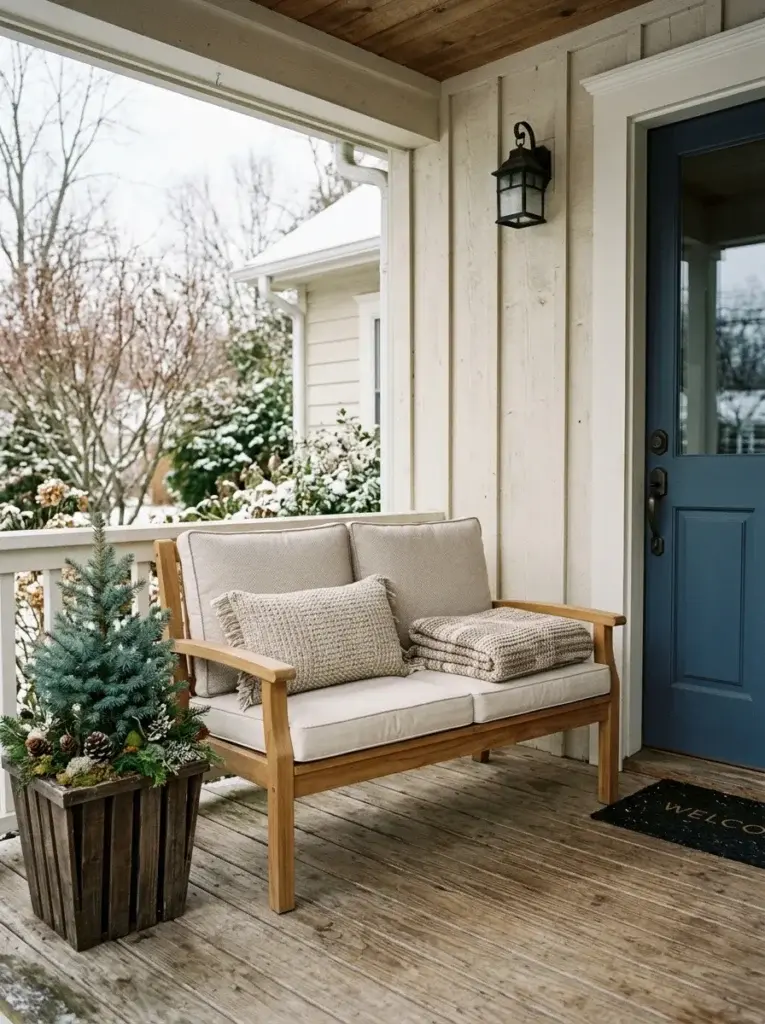
A small seating area can make a covered front porch feel inviting long after Christmas has passed. A wooden bench with weather-resistant cushions introduces a comfortable place to pause, while cream, taupe, and warm gray fabrics soften hard exterior surfaces. Keep the furniture proportional to the entrance so the arrangement feels welcoming rather than crowded.
Choose outdoor textiles that resist moisture and are easy to maintain. A textured cushion or neatly folded throw adds visual warmth, although delicate fabrics should be brought indoors when rain or snow threatens. One compact planter beside the bench completes the scene without competing with the seating arrangement.
Professional Tip: Check furniture stability and leave the entrance fully accessible before adding soft furnishings. Use quick-drying outdoor cushions, store decorative throws indoors during wet weather, and avoid leaving fabric where it can collect water. A covered porch offers the best conditions for maintaining this cozy look throughout winter.
9. Frost-Resistant Greenery and Pinecone Container Arrangements
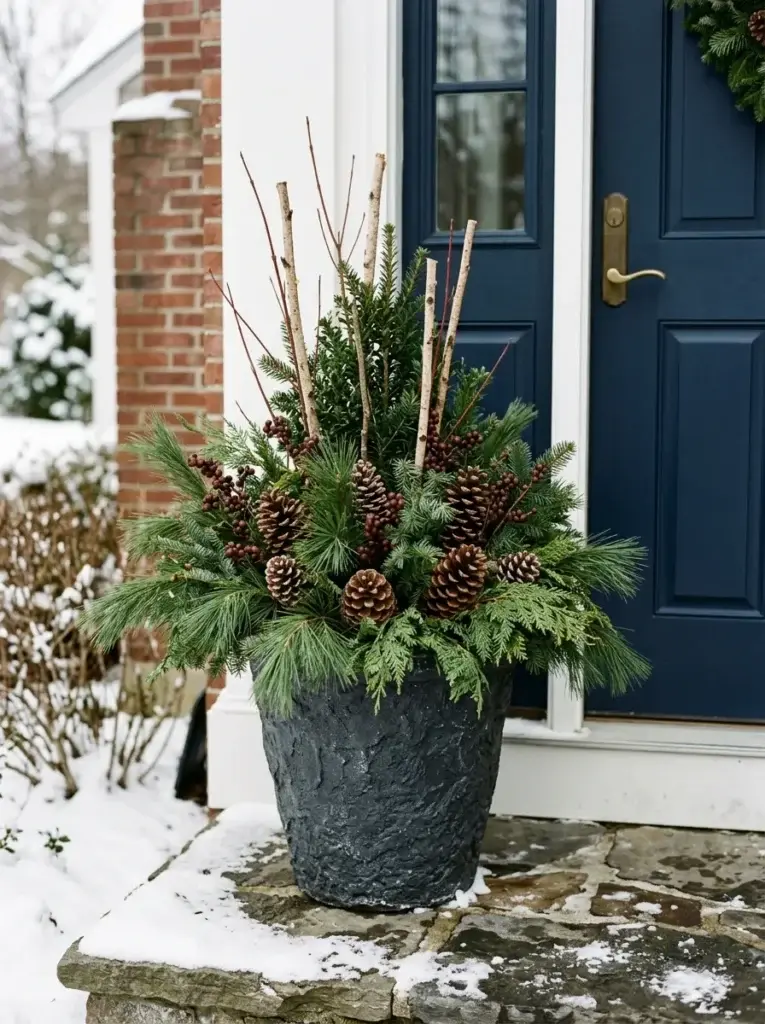
Container arrangements featuring cold-tolerant greenery and pinecones add organic detail without relying on colorful seasonal ornaments. Start with a sturdy planter and arrange evergreen foliage to create a naturally full silhouette. Pinecones introduce earthy texture, while twig accents add height and interest without making the display feel overly elaborate.
Choose plant varieties suited to your local winter temperatures and the amount of sunlight your entrance receives. In exposed locations, favor durable containers and stable arrangements that tolerate changing conditions. Pinecones can be left in their natural state, keeping the palette grounded in deep green, brown, and muted charcoal.
Professional Tip: Confirm the cold tolerance of live plants before purchasing them, and avoid assuming that every evergreen variety will thrive in every climate. Use containers with suitable drainage, check soil moisture periodically, and secure lightweight decorative materials so wind cannot scatter them across the porch.
10. A Modern Neutral Winter Porch with Simple Decorative Accents
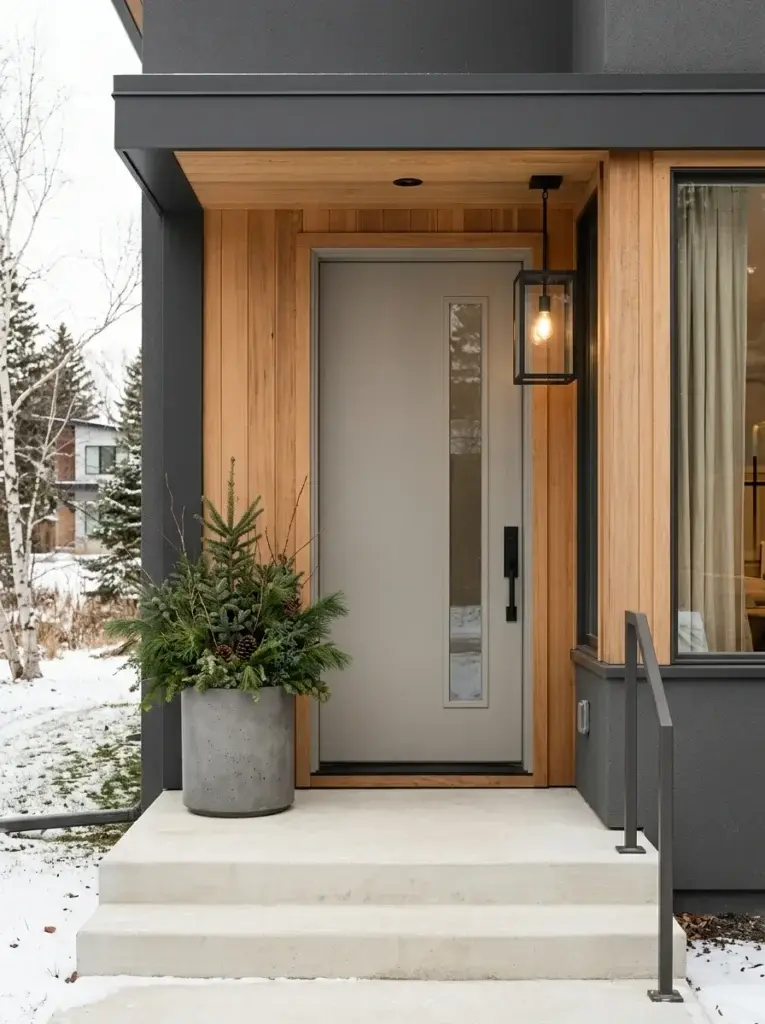
A modern winter porch benefits from restraint rather than an abundance of accessories. Begin with a limited palette of warm gray, cream, charcoal, and evergreen, then introduce a few pieces with clean silhouettes. A sculptural planter and a single lantern can create enough visual interest for a polished, contemporary entrance.
Keep decorative items aligned with the architecture instead of adding unrelated seasonal accents. Smooth concrete, matte metal, and natural wood provide subtle contrasts without overwhelming the scene. This approach is especially useful for homes with simple exterior lines, where carefully chosen materials can make a small decorating budget look considered.
Professional Tip: Edit the arrangement before adding anything else. Step back and assess the doorway from the street, then remove objects that interrupt the clean lines or obstruct movement. Choose durable outdoor finishes and repeat one or two existing exterior materials to make the winter styling feel integrated with the home.
11. Warm White Outdoor Lighting for a Welcoming January Entryway
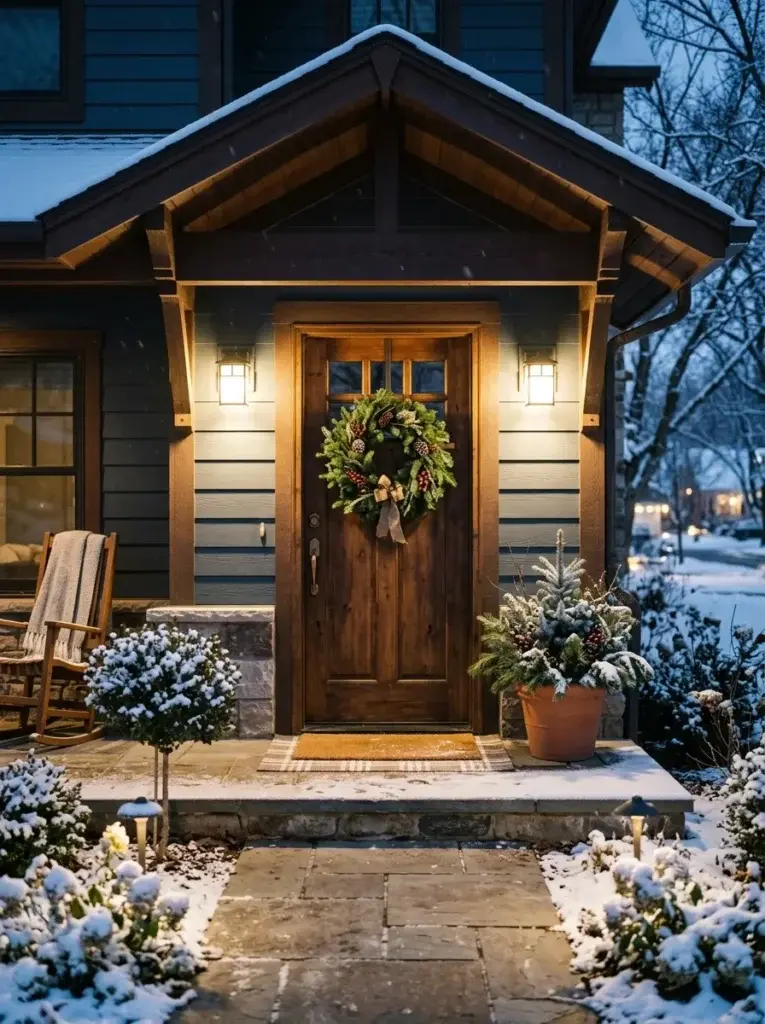
Thoughtful outdoor lighting makes a January entrance feel welcoming when daylight fades early. Warm-white wall sconces can highlight the door, architectural trim, and nearby greenery without creating the intense glare associated with overly bright lighting. A softly illuminated entrance also helps visitors identify the doorway and appreciate the surrounding winter decor.
Consider the relationship between existing porch lights and any additional fixtures before changing the arrangement. Subtle pathway lighting may complement the entry, provided it illuminates walking surfaces appropriately. Choose lighting designed for outdoor installation and keep the overall effect consistent with the home’s exterior rather than turning the porch into a decorative light display.
Professional Tip: Use fixtures rated for their actual exposure to rain, snow, and moisture, and follow manufacturer instructions for installation. Have a qualified electrician handle electrical work when needed. Aim lights to minimize glare, check that steps remain clearly visible, and avoid extension cords placed across walking routes.
12. Vintage-Inspired Winter Porch Decor with Antique Finishes
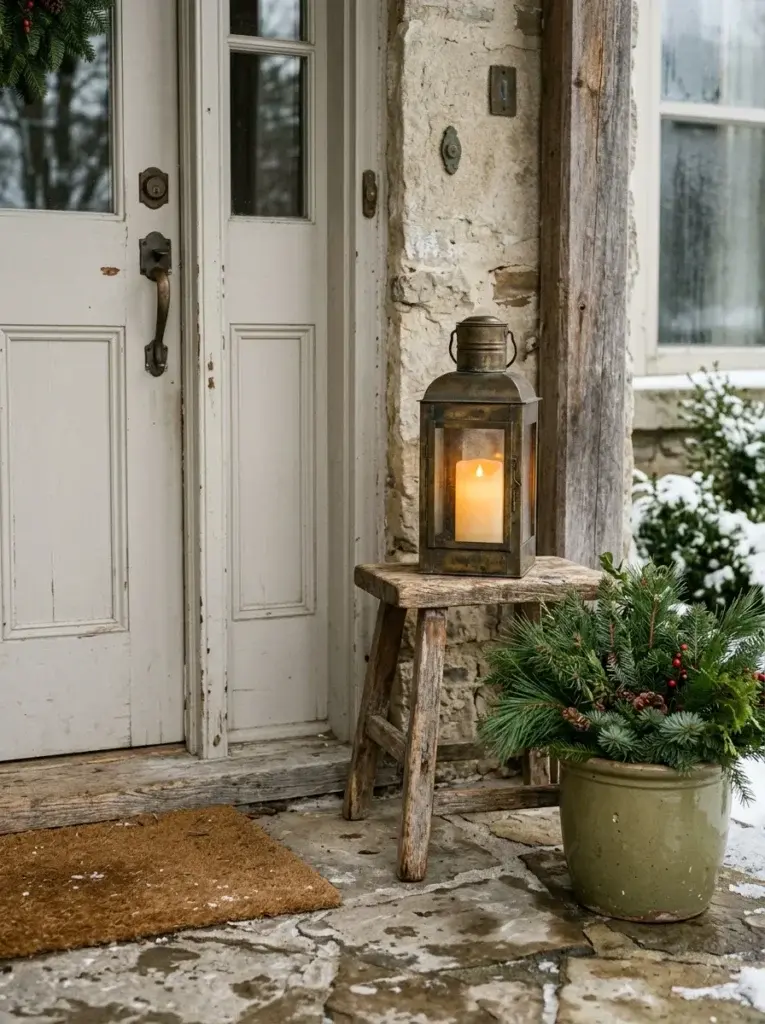
Vintage-inspired accessories bring character to winter decorating through patinated metal, weathered wood, and muted natural colors. An aged-brass lantern beside a simple stool creates a collected appearance, while an olive or charcoal planter introduces fresh greenery. The combination feels relaxed and established without relying on explicitly holiday-themed decorations.
For an achievable arrangement, choose one or two pieces with antique finishes instead of filling the entrance with mismatched objects. Their subtle imperfections provide visual interest against cleaner architectural surfaces. Weather-resistant reproductions can be practical alternatives when authentic vintage items are too delicate for outdoor exposure.
Professional Tip: Reserve delicate antiques for covered areas and use outdoor-suitable reproductions in exposed locations. Inspect older metal pieces for sharp edges, unstable bases, and flaking finishes before displaying them. Balance one characterful accessory with simpler materials so the entryway feels thoughtfully styled rather than cluttered.
13. Small Front Porch Styling with Space-Saving Winter Decor
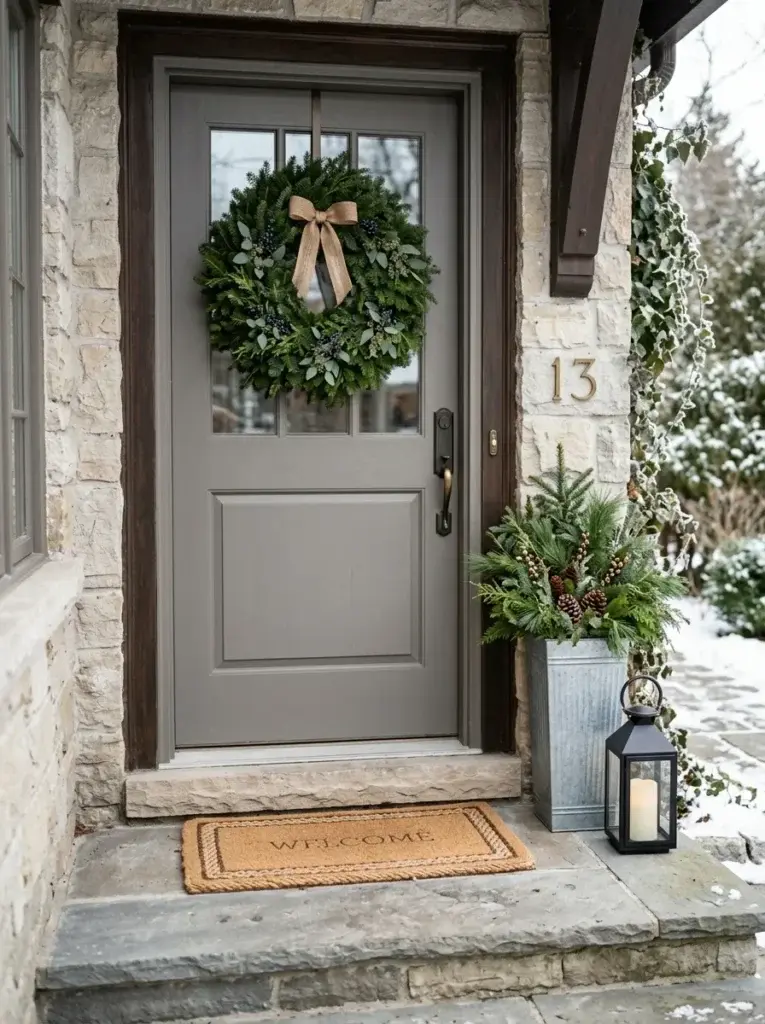
A small porch can feel seasonal and welcoming without sacrificing useful floor space. Focus on vertical decoration, such as a simple door wreath, and add one narrow planter beside the entrance. A compact lantern provides another point of interest, while a neatly sized doormat makes the space feel complete.
Limit the arrangement to a few coordinated materials and avoid bulky furniture or multiple large containers. Choose accessories that sit close to the wall without blocking the door or steps. This streamlined approach works especially well for apartments, townhouses, and homes with shallow entry landings.
Professional Tip: Measure the narrowest part of your porch and account for the full door swing before selecting accessories. Choose lightweight pieces that can be secured against wind, but avoid unstable tall planters. Keep the doormat flat, preserve the clear walking route, and remove any decoration that creates a tripping hazard.
14. Timeless Winter Porch Decor Using Greenery, Wood, and Stone
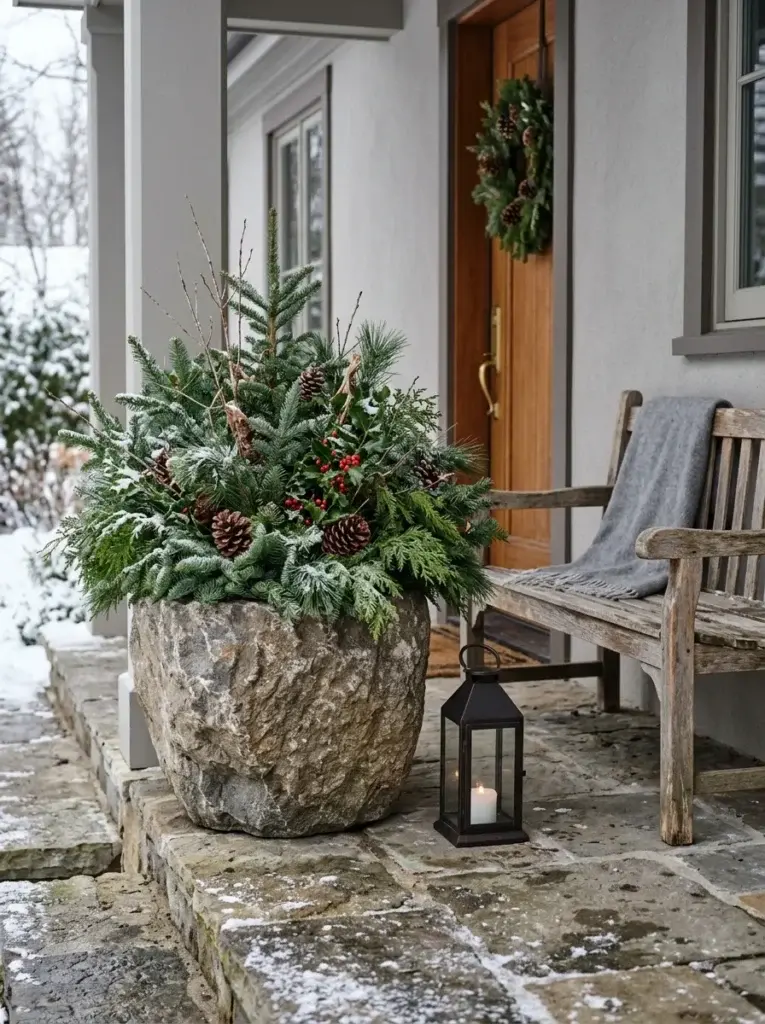
Greenery, wood, and stone form a timeless foundation for winter porch decor because their natural textures complement one another. A stone planter anchors the arrangement, a wooden bench adds warmth, and evergreen foliage supplies color when surrounding gardens appear dormant. One restrained lantern introduces a final decorative detail without overwhelming the materials.
This combination suits a range of exterior styles, from rustic cottages to contemporary homes with natural finishes. Rather than following a strict seasonal theme, focus on balanced proportions and durable accessories. The result remains appropriate throughout January and February, and many elements can be adapted for spring by replacing the greenery.
Professional Tip: Invest in durable foundational pieces that can work across multiple seasons. Protect wood and stone according to their material requirements, select outdoor-suitable lanterns, and refresh the arrangement by changing only the foliage when the weather warms. Keeping the largest pieces neutral makes future seasonal updates easier and more affordable.
FAQs on Outdoor winter front porch ideas
How Can I Decorate My Front Porch After Christmas?
Start by removing holiday-specific signs, ornaments, and bright seasonal ribbons, then retain any greenery or neutral accessories that still suit the space. Add a winter wreath, a sturdy planter, and one or two lanterns. Layered doormats and natural textures help the entryway feel complete without recreating a Christmas display.
What Decorations Work Best for an Outdoor Winter Front Porch?
Evergreen planters, weather-resistant lanterns, natural wreaths, durable doormats, and outdoor-rated lighting are versatile choices. Look for materials suited to your local weather, including moisture-resistant finishes and stable containers. Neutral colors, natural wood, and stone textures create a cohesive winter arrangement that works across different architectural styles and porch sizes.
How Can I Use Lanterns to Decorate a Winter Porch?
Arrange lanterns in varied heights beside the door, near a planter, or at the edge of a spacious landing. Use outdoor-suitable battery-operated candles for a warm glow without an open flame. Choose stable lanterns, protect them from severe weather, and keep steps and walking paths unobstructed.
How Can I Make a Small Front Porch Feel Cozy in Winter?
Use a few compact decorations instead of filling the available floor space. A simple wreath, narrow evergreen planter, layered doormat, and small lantern can create a welcoming entrance. Repeat two or three complementary colors, favor vertical styling, and leave the doorway and walking route clear for everyday convenience.
How Can I Decorate My Porch for January and February Without Christmas Decorations?
Choose decorations that celebrate winter’s natural textures rather than a specific holiday. Evergreen foliage, birch branches, pinecones, neutral textiles, and warm outdoor lighting provide seasonal interest without red bows or festive ornaments. A minimalist wreath and weather-resistant planters can remain attractive through February and transition easily into early spring.
Conclusion
The best outdoor winter front porch ideas combine practical styling with natural seasonal beauty. Thoughtfully placed lanterns, evergreen planters, layered textures, neutral colors, and welcoming entryway details can transform a bare entrance after Christmas. Start with one manageable change, build around your home’s existing features, and create a winter porch that feels uniquely yours.